The Black Dahlia — Elizabeth Short
A non-graphic, source-based look at The Black Dahlia — Elizabeth Short, separating documented facts from allegations, uncertainty and later interpretation.
How do you want this story?
The Black Dahlia — Elizabeth Short
A non-graphic, source-based look at The Black Dahlia — Elizabeth Short, separating documented facts from allegations, uncertainty and later interpretation. The Black Dahlia — Elizabeth Short The Incredible Story of a Girl Who Became a Mystery and Never Got Justice Her name was Elizabeth. Not the black Dahlia. Not a front page story. Not a tabloid sensation that sold papers for decades. Just a twenty-two-year-old girl named Elizabeth Short, who came toLos Angeles Los Angeles the way thousands of young women came to Los Angeles in the 1940s — bright-eyed, hopeful, carrying dreams the city had not yet earned the right to shatter. She never got to find out if those dreams would have come…
The Black Dahlia — Elizabeth Short
The Incredible Story of a Girl Who Became a Mystery and Never Got Justice
Her name was Elizabeth.
Not the black Dahlia. Not a front page story. Not a tabloid sensation that sold papers for decades.
Just a twenty-two-year-old girl named Elizabeth Short, who came toLos Angeles Los Angeles the way thousands of young women came to Los Angeles in the 1940s — bright-eyed, hopeful, carrying dreams the city had not yet earned the right to shatter.
She never got to find out if those dreams would have come true.
Instead, her fate became one of the most notorious unsolved murders in American history.
News Headline The Girl Before
Born in 1924, Elizabeth Short grew up in Massachusetts and then moved west, pulled by the same magnetic pull that had drawn so many young people to Los Angeles during that time period – the promise of something better, something brighter, something that felt like it might actually be within reach if you were brave enough to chase it.
She loved movies. She wrote home to her family, the kind of letters young women far from home write—updates on small triumphs, reassurances that all was well, the careful optimism of someone trying to convince her parents and herself that leaving home had been the correct choice.
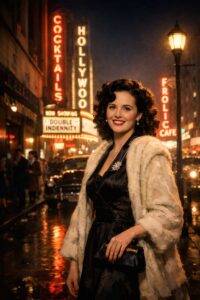
Her hair was dark and curly, and she had one of those bright smiles that photograph well and make people remember your face. By all accounts before January 1947, she was an ordinary young woman building an ordinary life on small hopes and modest plans.
All that was irrelevant to what came next.
15th January 1947
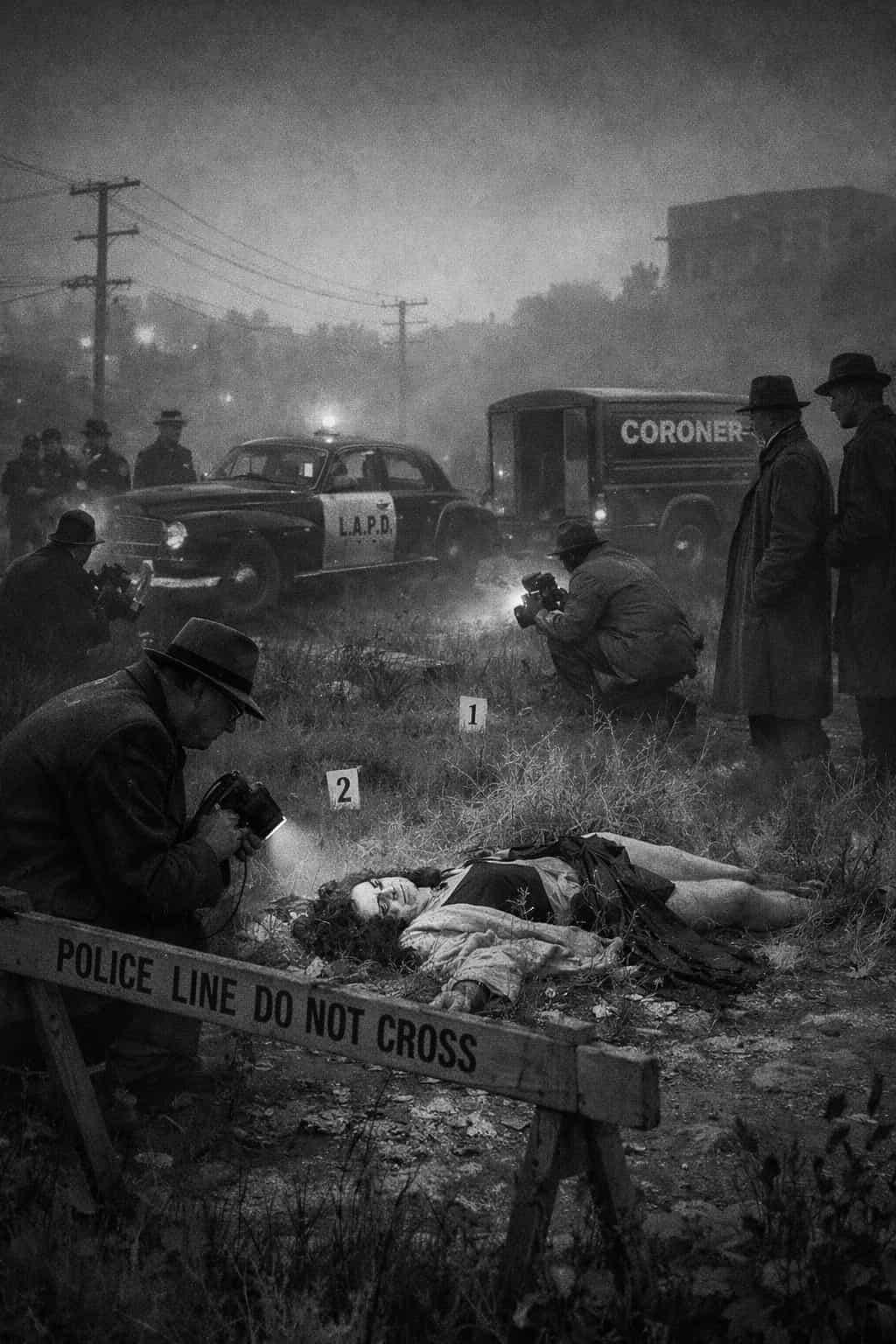
Elizabeth Short’s body was found in a vacant lot in Los Angeles’ Leimert Park on the morning of January 15, 1947.
The police were first on the scene. Then the news crews. And in hours, what had happened to one young woman was something else altogether-a story, a sensation, a name the whole country would soon know without knowing anything true about the person behind it.
The press had given her a nickname she never wanted and never had chosen: The Black Dahlia. Pitch. Dramatic. Created to sell papers not to celebrate a life just violently ended.
It worked exactly as it was meant to. The story went national, and Elizabeth Short’s face was plastered on front pages everywhere, not because people cared who she was, but because the mystery of her death was too irresistible, and made people forget there was a real person attached to it.
The Investigation That Turned Up Nothing
What followed was one of the largest criminal investigations in the history of the Los Angeles Police Department.
Hundreds of tips rolled in. In the months and years that followed, investigators questioned more than 150 suspects. Some of those confessions were from men who seemed to have no real connection to the crime.
Men who were lured by the spotlight, by the strange magnetic pull that high-profile murder cases sometimes have on people looking for attention or notoriety, no matter the price.
It was all to no purpose.
No one was ever charged. No definitive suspect was ever identified with enough evidence to prosecute. Eventually, the investigation went cold despite its size and the resources devoted to it.
It has been cold for over seventy-five years.
What Never Got Cold
The investigation had come to a standstill, but the public’s fascination with the case had not.
Newspapers kept running her picture. Books have been written. Theories abounded. Her death became a cultural touchstone through the decades, referenced in movies and novels, true-crime retrospectives, endlessly discussed, endlessly unsolved.
Somewhere along the line, Elizabeth Short herself had all but disappeared behind the legend built around her death. The Black Dahlia was a nickname known to people who couldn’t name a single fact about her real life. People argued over suspects and theories with fiery passion while knowing little about the young woman who had loved movies, written letters home, and hoped for a future that never arrived.
She was entertainment. A puzzle to be solved. A story to be told. A mystery that made money and headlines for nearly everybody but the person at the center of it.
What people forget to
What gets lost in all of it—the nickname, the headlines, the decades of speculation—is the simple fact that Elizabeth Short was a girl.
Not a headliner. No secret. Not a cautionary tale to warn other young women of the dangers of the big city.
A girl who ought to have grown old. Who deserved a chance to see if LA would give her what she would come looking for. Who deserved, at the very least, to see some sort of justice done on the people responsible for her death.
She didn’t get none of dat.
Los Angeles gave notoriety to Elizabeth Short, not justice, fame she never sought, forever linked to a death she never deserved, while the person who committed the crime remained free and unidentified.
The Question Remaining
Elizabeth Short’s body was found on that vacant lot more than seventy-five years ago, and the case remains officially unsolved.
Theories keep coming out. Old evidence is being examined by researchers. Suspects investigated decades ago but never charged still debated in true crime communities.
And none of it has produced an answer.
Elizabeth Short deserved better than what happened to her in January, 1947. She deserved better than what happened to her memory in the decades that followed: the reduction of a real, specific, irreplaceable human life to a tabloid moniker and an entertainment product.
She was a girl who loved movies.
She deserved to love them for so many more years than she did.
Elizabeth Short · 1924-1947 · Los Angeles, CA
Found January 15, 1947 · Leimert Park
Investigated 150+ suspects • No arrests
Case officially still unsolved.
If you want to read more like this, click here:The Vanishing Hitchhiker Route 66, America
Sources & References
- FBI — Centennial History / Black Dahlia case summary: https://www.fbi.gov/file-repository/reports-and-publications/fbi100book.pdf
- FBI Law Enforcement Bulletin, September 1947: https://leb.fbi.gov/file-repository/archives/september-1947.pdf
- FBI — Centennial History / Black Dahlia case summary ↗
- FBI Law Enforcement Bulletin, September 1947 ↗
TaleHive separates published reporting from personal accounts and editorial context where relevant.
More from the hive
Richard McCoy and the 1972 United Airlines Skyjacking
Gilgo Beach Serial Killings — The Case That Changed in 2026