
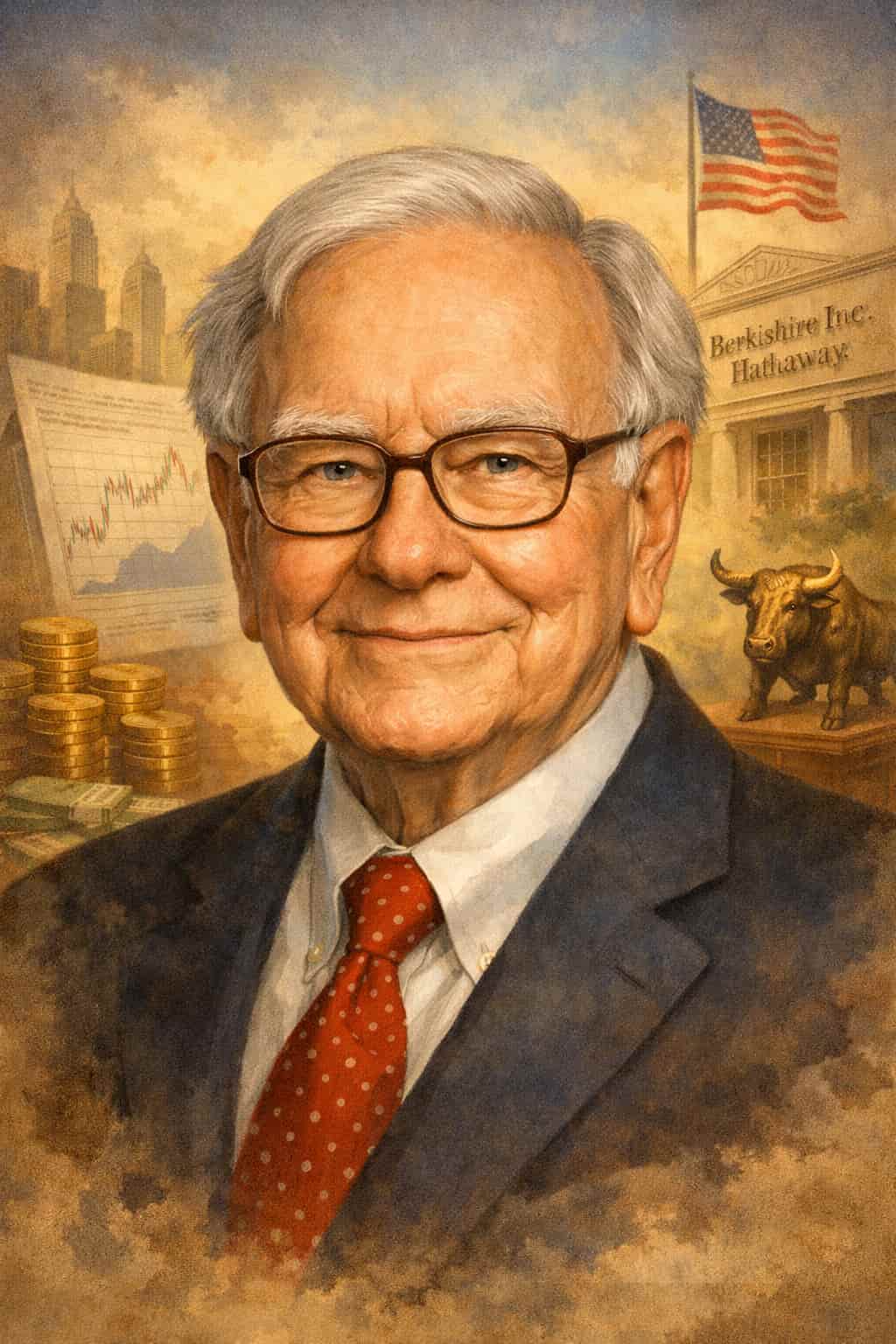
Warren Buffett — The Long Game of Berkshire Hathaway
Explore the documented turning points, decisions and setbacks behind Warren Buffett — The Long Game of Berkshire Hathaway, with sources and an editorially…
How do you want this story?
Warren Buffett — The Long Game of Berkshire Hathaway
Explore the documented turning points, decisions and setbacks behind Warren Buffett — The Long Game of Berkshire Hathaway, with sources and an editorially… Warren Buffett — The Long Game of Berkshire Hathaway How an Omaha investor turned patience, disciplined capital allocation and a failing textile company into one of America’s most closely watched corporate stories. A student of value Warren Buffett was born in Omaha, Nebraska, in 1930 and developed an interest in numbers, business and investing while he was young. After studying at the University of Nebraska, he attended Columbia Business School, where Benjamin Graham taught an approach to investing built around price, value and a margin of safety. Graham’s influence gave Buffett a…
Warren Buffett — The Long Game of Berkshire Hathaway
How an Omaha investor turned patience, disciplined capital allocation and a failing textile company into one of America’s most closely watched corporate stories.
A student of value
Warren Buffett was born in Omaha, Nebraska, in 1930 and developed an interest in numbers, business and investing while he was young. After studying at the University of Nebraska, he attended Columbia Business School, where Benjamin Graham taught an approach to investing built around price, value and a margin of safety. Graham’s influence gave Buffett a framework, but Buffett’s later career would broaden that framework well beyond simply buying statistically cheap securities.
After working for Graham-Newman in New York, Buffett returned to Omaha and began investment partnerships in the 1950s. Those partnerships gave him control over a growing pool of capital and established the habits that would define his career: read deeply, wait for opportunities, concentrate when the odds look favorable and avoid activity for activity’s sake.
The strange road to Berkshire Hathaway
Berkshire Hathaway began as a New England textile business. Buffett bought shares because he believed they were undervalued, then eventually took control. The textile operation itself struggled against powerful economic forces and was ultimately shut down, but the corporate shell became the vehicle through which Buffett and his longtime partner Charlie Munger assembled a very different collection of businesses and investments.
One of the decisive changes was insurance. Berkshire acquired National Indemnity in 1967. Insurance companies collect premiums before all claims are paid, creating funds known as float. When underwriting is disciplined, that float can provide a large pool of capital to invest. Berkshire repeatedly emphasized in its annual reports that insurance is central to the company’s economics, though float is not free money and carries real obligations to policyholders.
From cheap stocks to great businesses
Munger helped push Buffett toward buying outstanding businesses at sensible prices rather than focusing only on businesses that looked statistically cheap. The shift can be seen in Berkshire’s long-term holdings and acquisitions. Buffett came to favor companies with durable economics, trustworthy managers, strong brands or other advantages that could keep producing cash over long periods.
Berkshire also developed an unusually decentralized structure. Many subsidiary managers run their businesses with substantial autonomy, while capital allocation remains concentrated at headquarters. That combination allowed Berkshire to own businesses in insurance, rail transportation, energy, manufacturing, retail and services without trying to operate every company from Omaha.
Compounding and restraint
Buffett’s annual shareholder letters repeatedly return to a small set of ideas: avoid permanent loss of capital, use debt carefully, judge businesses over long periods and keep enough liquidity to survive shocks. The famous results came not from one trade but from decades of compounding. Gains retained inside Berkshire could be redeployed into new securities, acquisitions or the company’s own shares when management believed the price was attractive.
Just as important was the willingness to do nothing. Buffett often compared investing with waiting for the right pitch in baseball. A public-market investor is not required to swing at every opportunity. That patience became part of Berkshire’s identity and helped distinguish its approach from strategies built around constant trading.
A company larger than one investor
For decades Buffett was the public face of Berkshire, while Munger served as an intellectual partner until his death in 2023. As Buffett grew older, Berkshire increasingly discussed succession, operating managers and the executives responsible for investment decisions. The company’s scale means its future cannot depend on finding another person with exactly the same personality or record.
The more durable inheritance is a set of institutional habits: maintain a strong balance sheet, protect reputation, give capable managers room to operate and allocate capital with a long horizon. Those principles, rather than a daily estimate of Buffett’s personal wealth, are the useful part of the story for readers.
Why the story still matters
Berkshire Hathaway demonstrates how a simple idea can become difficult in practice. Compounding rewards patience, but only when the underlying decisions are sound and the organization survives long enough for time to matter. Buffett’s career is therefore less a shortcut to wealth than a case study in discipline, incentives, risk and the cumulative effect of thousands of capital-allocation choices.
What Buffett’s example does not promise
Berkshire’s record is sometimes turned into a collection of slogans about patience or buying good companies. Those ideas are easy to repeat and difficult to execute. Buffett had access to detailed financial information, decades of experience, a corporate structure able to deploy large amounts of capital and, through Berkshire’s insurance operations, resources very different from those of an ordinary household investor.
The responsible lesson is therefore not to imitate individual trades or assume historical returns will repeat. It is to study the principles visible in Berkshire’s own reports: understand what you own, avoid leverage that can force bad decisions, think about downside risk, judge managers carefully and allow time for sound economics to compound. Those principles are educational ideas, not a promise of investment results.
Sources & References
- Berkshire Hathaway — Warren Buffett shareholder letters: https://www.berkshirehathaway.com/letters/letters.html
- Berkshire Hathaway — annual reports: https://www.berkshirehathaway.com/reports.html
TaleHive separates published reporting from personal accounts and editorial context where relevant.
More from the hive
 🎧 Audio Available
Phil Knight — From Car Trunk to Nike

Jan Koum — From Food Stamps to WhatsApp