September 11, 2001 — A Timeline and Remembrance
A source-based TaleHive feature on September 11, 2001 — A Timeline and Remembrance, separating documented history from theories, folklore and unresolved…
How do you want this story?
September 11, 2001 — A Timeline and Remembrance
A source-based TaleHive feature on September 11, 2001 — A Timeline and Remembrance, separating documented history from theories, folklore and unresolved… September 11, 2001 — A Timeline and Remembrance A factual, non-graphic overview of the September 11 attacks, the people affected and the historical changes that followed. The morning of September 11 On the morning of September 11, 2001, 19 al-Qaeda terrorists hijacked four commercial airliners in the United States. American Airlines Flight 11 struck the North Tower of the World Trade Center at 8:46 a.m. United Airlines Flight 175 struck the South Tower at 9:03 a.m. American Airlines Flight 77 struck the Pentagon in Arlington, Virginia, at 9:37 a.m. On United Airlines Flight 93,…
September 11, 2001 — A Timeline and Remembrance
A factual, non-graphic overview of the September 11 attacks, the people affected and the historical changes that followed.
The morning of September 11
On the morning of September 11, 2001, 19 al-Qaeda terrorists hijacked four commercial airliners in the United States. American Airlines Flight 11 struck the North Tower of the World Trade Center at 8:46 a.m. United Airlines Flight 175 struck the South Tower at 9:03 a.m.
American Airlines Flight 77 struck the Pentagon in Arlington, Virginia, at 9:37 a.m. On United Airlines Flight 93, passengers and crew attempted to regain control after learning of the other attacks. The aircraft crashed near Shanksville, Pennsylvania, at 10:03 a.m.
Collapse and rescue
The South Tower collapsed at 9:59 a.m. and the North Tower at 10:28 a.m. Firefighters, police officers, emergency medical personnel, building workers and civilians carried out evacuations and rescues under extraordinary conditions. Many first responders were killed while helping others leave the buildings.
The National September 11 Memorial & Museum records 2,977 victims of the attacks, excluding the 19 hijackers. The dead came from many countries and included office workers, travelers, aircraft crew members, emergency responders and people at the Pentagon and near the crash sites.
After the attacks
The attacks changed U.S. security policy, aviation, intelligence coordination and foreign policy. Congress created new authorities and agencies were reorganized. The United States launched military operations in Afghanistan against al-Qaeda and the Taliban government that had sheltered its leadership.
The long-term consequences extended far beyond the day itself. Survivors and responders faced lasting health effects. Families organized memorials, charities and advocacy efforts. Communities across the United States and other countries also confronted a rise in anti-Muslim, anti-Arab and anti-Sikh harassment, an important part of the social history that followed the attacks.
Remembering responsibly
This subject should not be presented as spectacle. Photographs and video from September 11 can be deeply distressing, and TaleHive avoids graphic imagery. A responsible historical account should focus on verified chronology, the human impact and the records preserved by institutions such as the National September 11 Memorial & Museum.
Anniversaries continue to bring families, survivors, responders and members of the public together at the memorial sites in New York, Virginia and Pennsylvania. The names of the victims, not only the images of destruction, remain at the center of remembrance.
Why the story still matters
September 11 is history, but it is also living memory for millions of people. Accuracy, restraint and respect are essential whenever that history is retold.
The attacks beyond lower Manhattan
The World Trade Center was only one part of the September 11 attacks. American Airlines Flight 77 was hijacked and crashed into the Pentagon in Arlington, Virginia. United Airlines Flight 93 was also hijacked. After passengers and crew learned that other aircraft had been used as weapons, they attempted to regain control; the plane crashed in a field near Shanksville, Pennsylvania. Everyone aboard the four hijacked aircraft was killed.
The attacks killed 2,977 victims, not counting the 19 hijackers, according to the National September 11 Memorial & Museum. The dead included people from many countries, hundreds of firefighters and law-enforcement officers, military and civilian personnel at the Pentagon, airline crews, passengers and people working or visiting in and around the towers. The number is not merely a statistic: each represents an individual life, family and community altered permanently.
The FBI describes the investigation that followed as the largest in its history. Agents worked with domestic and international partners to identify the hijackers, reconstruct travel and financing, collect evidence and understand the al-Qaeda network responsible. The attacks also produced far-reaching changes in aviation security, intelligence, foreign policy and emergency planning whose consequences continued long after the day itself.
Remembrance requires resisting two distortions at once: reducing the event to shocking imagery, and turning it into a vague symbol detached from actual people. A responsible account keeps the chronology clear, avoids graphic spectacle and names the human cost. The September 11 Memorial & Museum, the Flight 93 National Memorial and the Pentagon Memorial preserve different parts of that history for later generations.
Reading the history responsibly
September 11 is still within living memory, which means many readers experienced the day directly while younger readers know it only through photographs, recordings and later history. That creates an editorial responsibility to distinguish the sequence of verified events from rumor, political argument and graphic spectacle. Official timelines and investigative records are the foundation for this page; they provide a common factual baseline before any wider discussion begins.
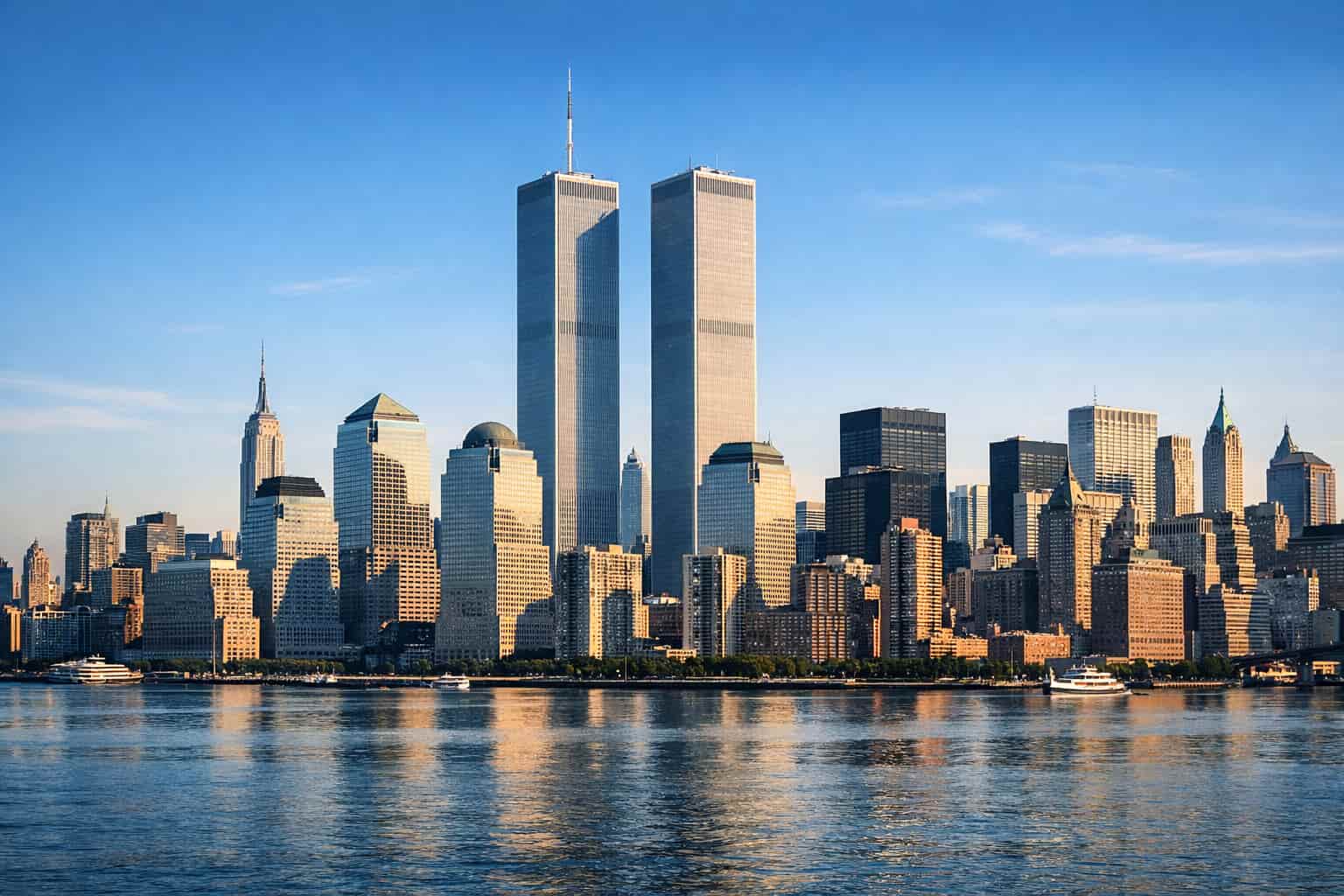
TaleHive’s purpose here is remembrance and historical understanding, not entertainment built from suffering. Images or future additions to this article should follow the same rule: use memorial, archival, skyline, responder or location imagery rather than graphic depictions of victims. The story is powerful enough when the facts, the names of places and the scale of the loss are presented with care.
Sources & References
- National September 11 Memorial & Museum — Historical Backgrounder / timeline: https://www.911memorial.org/sites/default/files/inline-files/Backgrounder2021.pdf
- FBI — 9/11 Investigation: https://www.fbi.gov/history/famous-cases/911-investigation
- National September 11 Memorial & Museum — Historical Backgrounder / timeline ↗
- FBI — 9/11 Investigation ↗
TaleHive separates published reporting from personal accounts and editorial context where relevant.
More from the hive
 🎧 Audio Available
The School the World Forgot
Villisca Axe Murders – 1912