The School the World Forgot
A storm. An American bomber. A village school. More than eight decades later, Freckleton still remembers.
How do you want this story?
The School the World Forgot
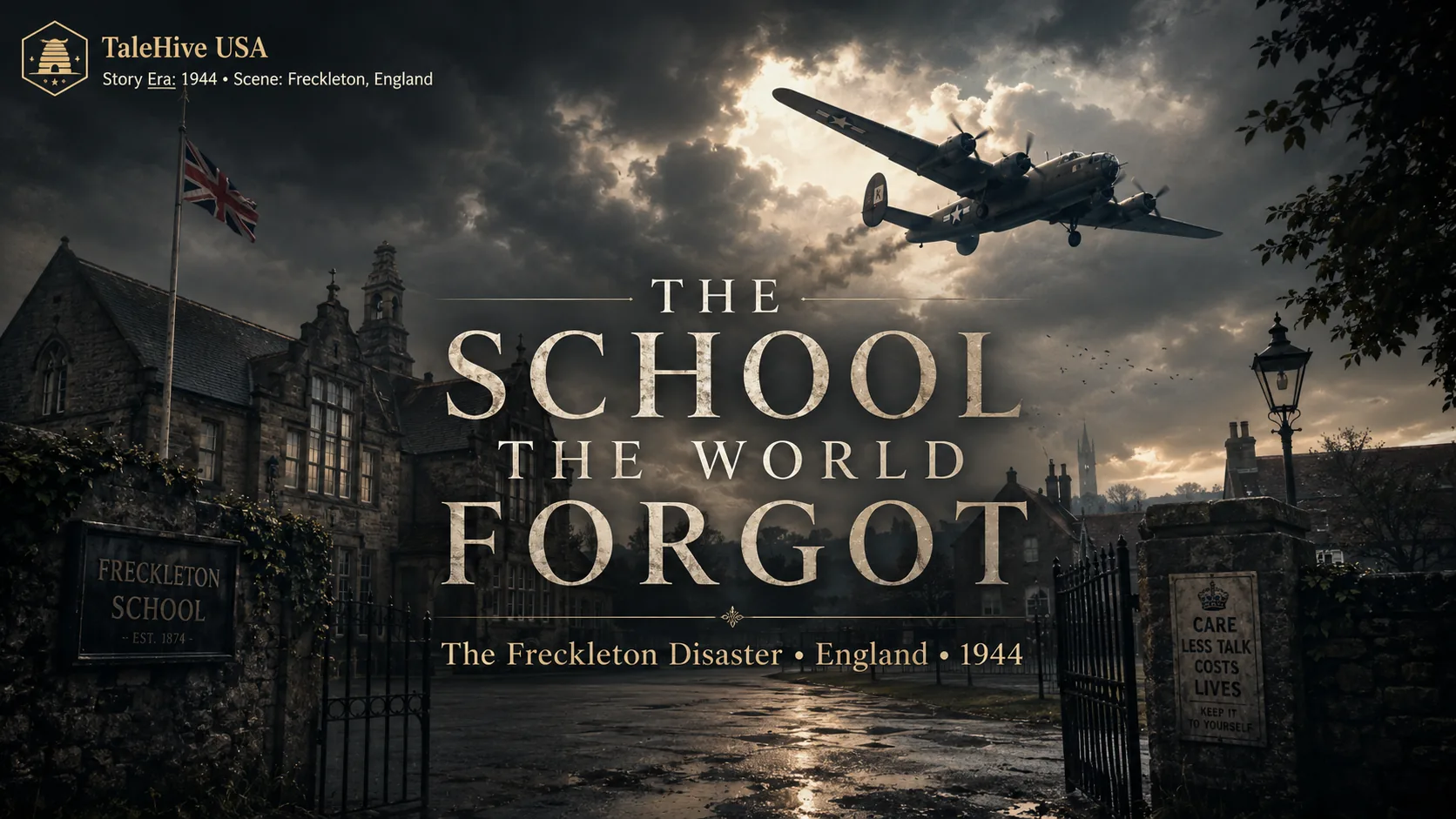
On August 23, 1944, a U.S. B-24 Liberator on a test flight encountered a violent storm over Freckleton, Lancashire. The aircraft came down into the village, striking Holy Trinity School and nearby buildings. Sixty-one people died, including 38 young children and two teachers. British villagers, firefighters and American servicemen rushed into the disaster area together to search for survivors. In the days that followed, American servicemen helped the community bury its dead, and later funded a memorial playground for Freckleton children. The exact chain of events that brought the bomber down has never been settled with complete certainty. The village rebuilt, the war ended, and the wider world moved on — but Freckleton kept the names alive.
At 10:47 on a rainy Wednesday morning, the people of a small English village heard something that did not belong to the storm.
An aircraft.
It was flying far too low.
For a few seconds, nobody in Freckleton could have understood what was about to happen.
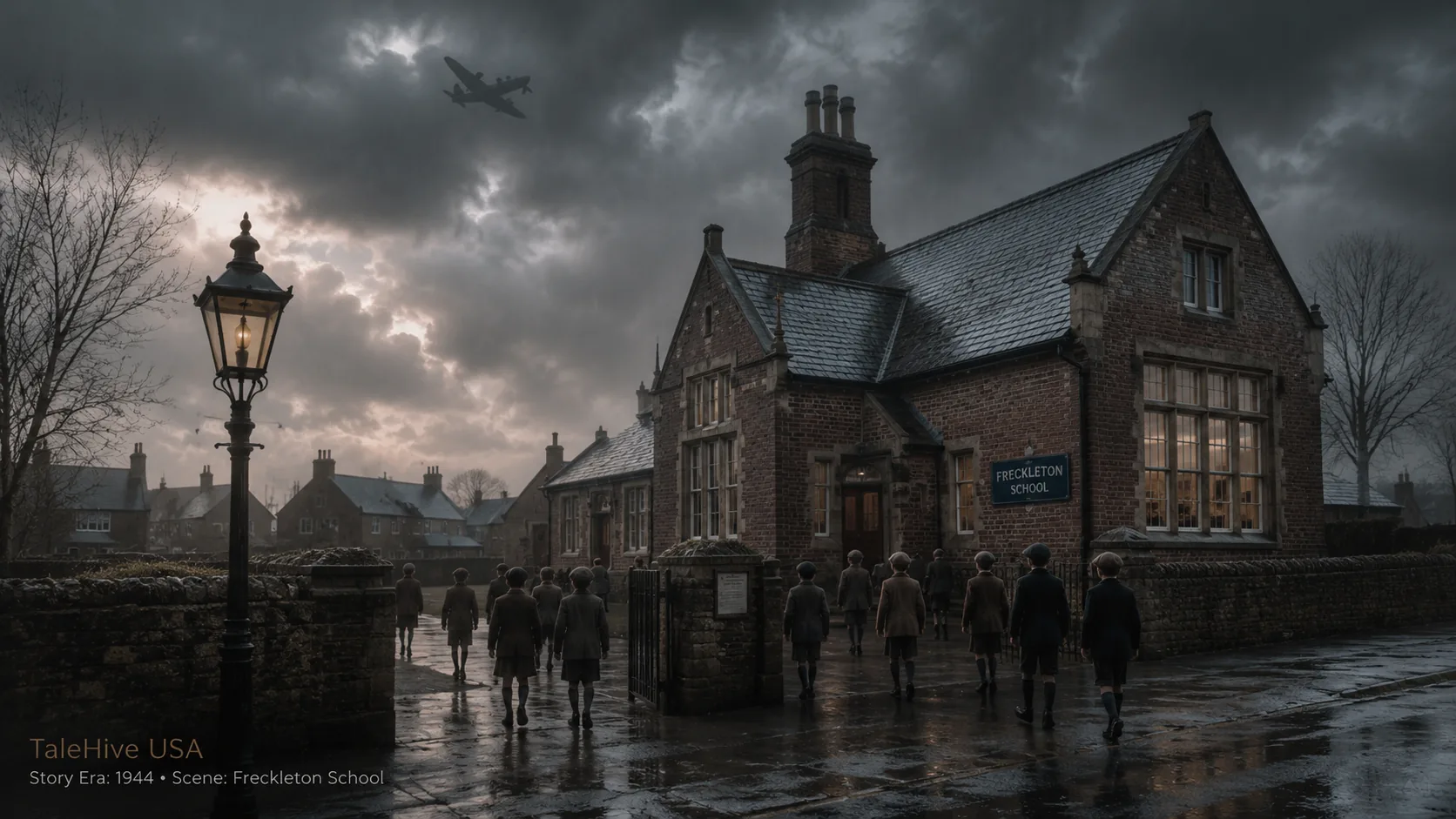
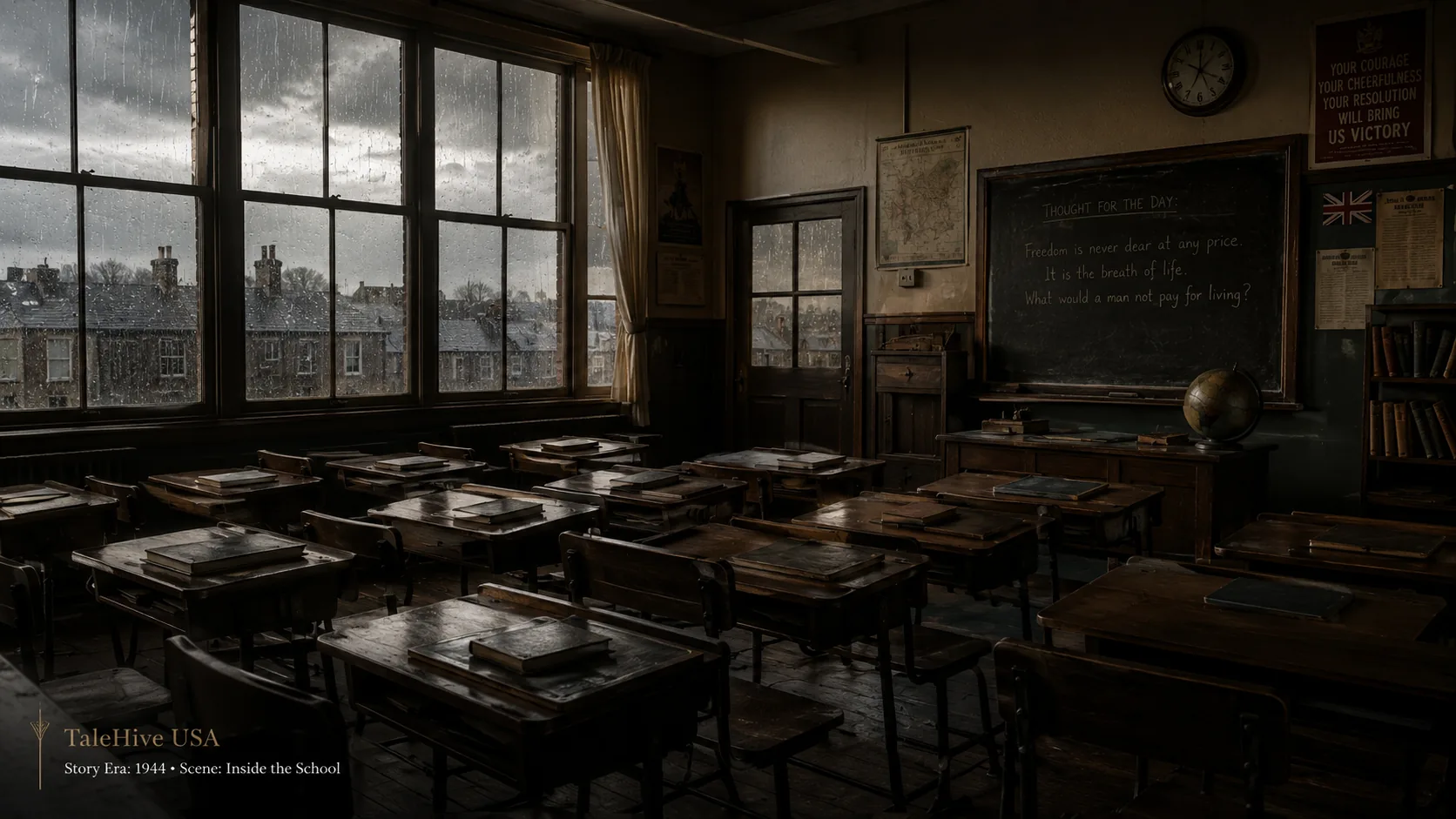
Inside the village school, children between four and six years old were sitting in their classroom. Outside, rain hammered the windows. Teachers tried to keep the children calm as a violent storm rolled across Lancashire.
Less than a mile away, an American B-24 Liberator bomber was trying to return to its airfield.
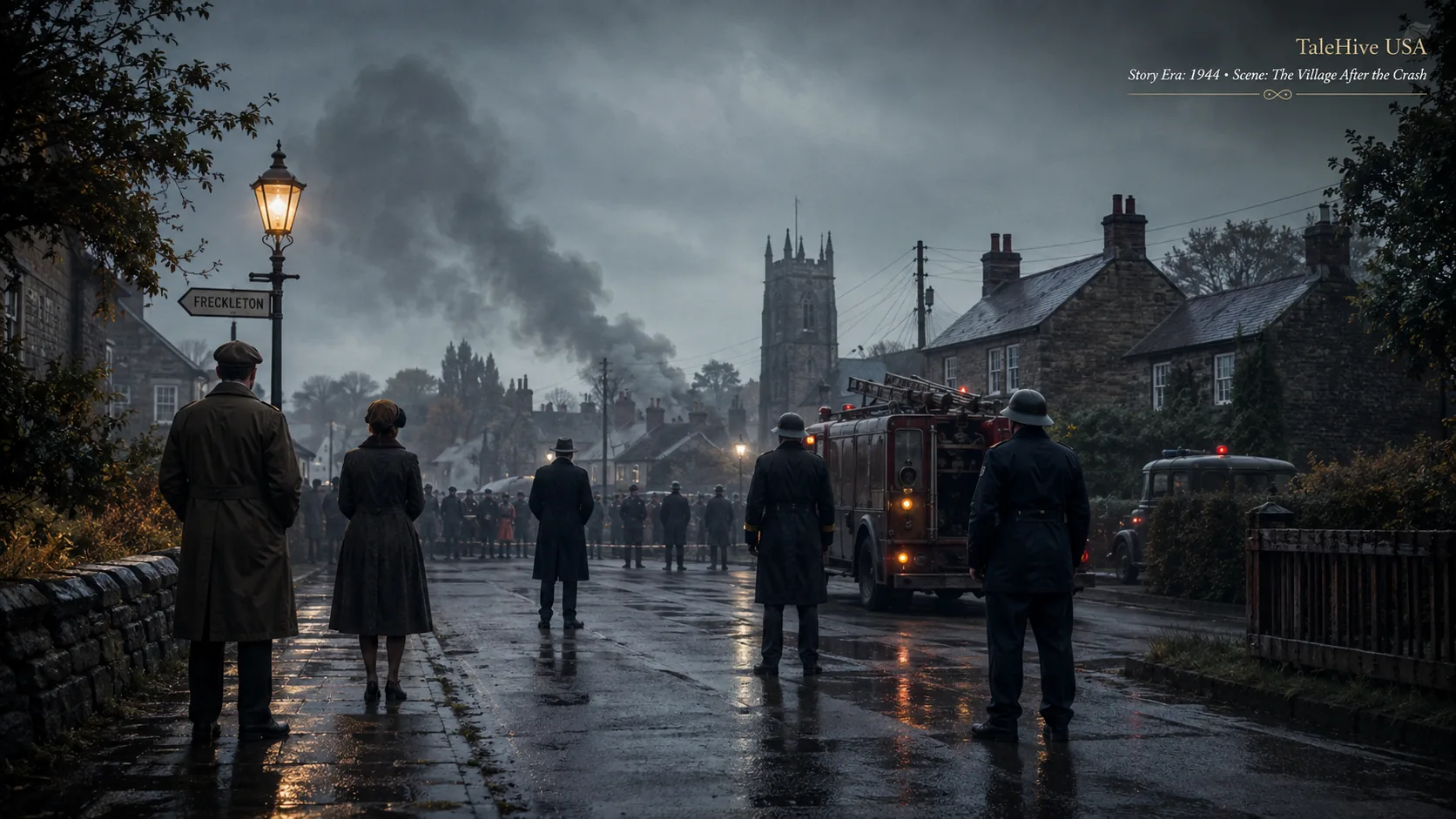
Minutes later, the aircraft came down in the middle of the village.
By the end of that day, Freckleton would never be the same again.
Sixty-one people eventually lost their lives. Thirty-eight were children.
Most of the children were only four, five or six years old.
And more than eight decades later, one question still follows the story: how did one of the most devastating civilian aviation tragedies of the Second World War become a story so many people have never heard?
A Village That Felt Safe
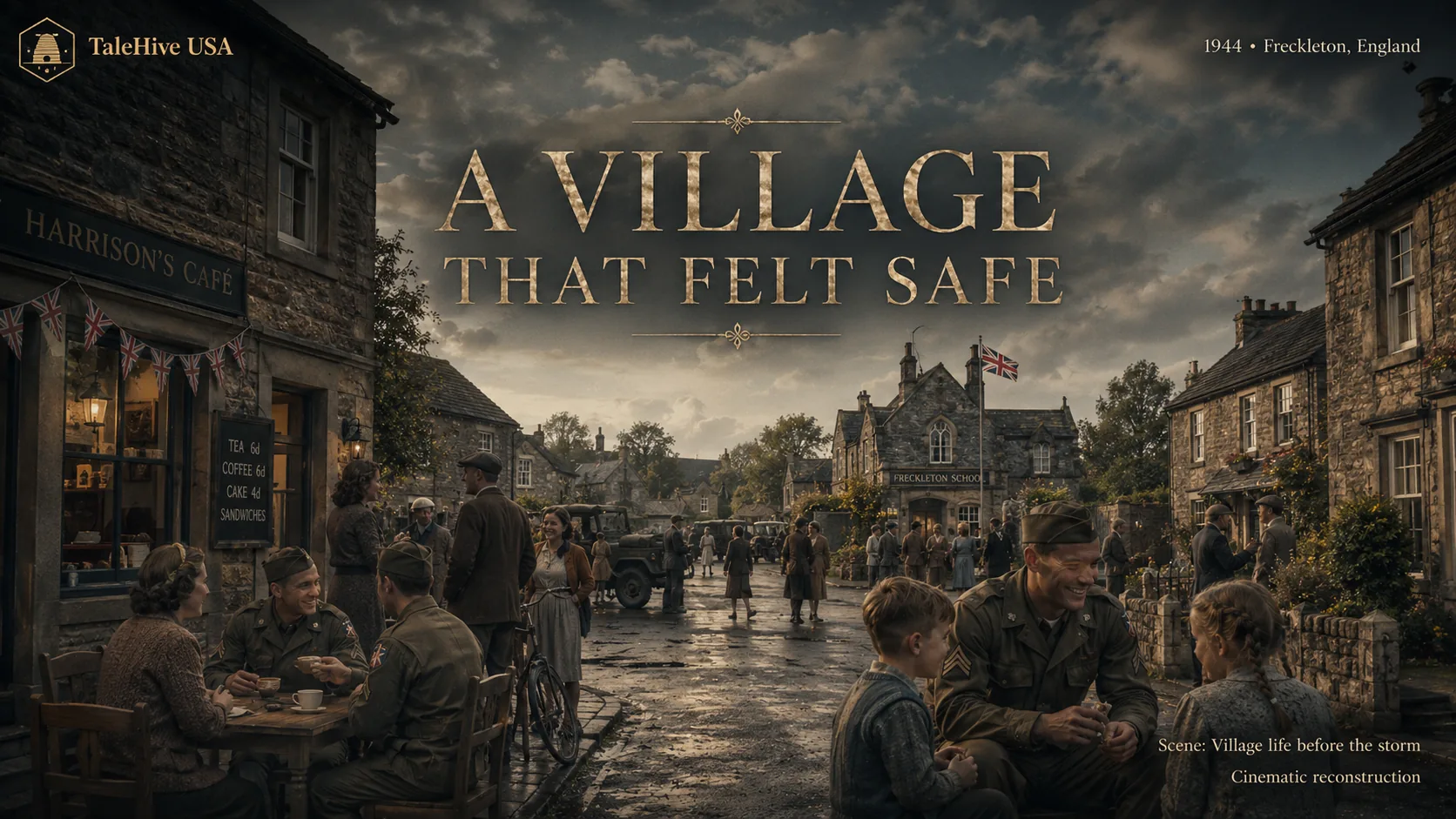
Freckleton was a small Lancashire village in northwest England. Around a thousand people lived there during the war. It was far from London and the cities that had endured repeated bombing, and for some families the countryside felt safer.
But there was one thing that made Freckleton unusual.
Nearby stood Base Air Depot No. 2 at Warton, a large American military aviation facility. Thousands of American servicemen passed through the area. They repaired aircraft, tested bombers and prepared planes that would return to combat operations over Europe.
Over time, American servicemen became familiar faces around Freckleton. They spoke with villagers, visited local cafés and pubs, and sometimes gave sweets or chewing gum to children. The American presence became so familiar that the area was remembered by some as Little America.
There was even a small café known as the Sad Sack Snack Bar, popular with servicemen and villagers.
By 1944, the war had brought the Americans and the people of Freckleton unusually close together. Nobody could have imagined that an American aircraft would soon become part of the village’s darkest day.
Wednesday, August 23, 1944
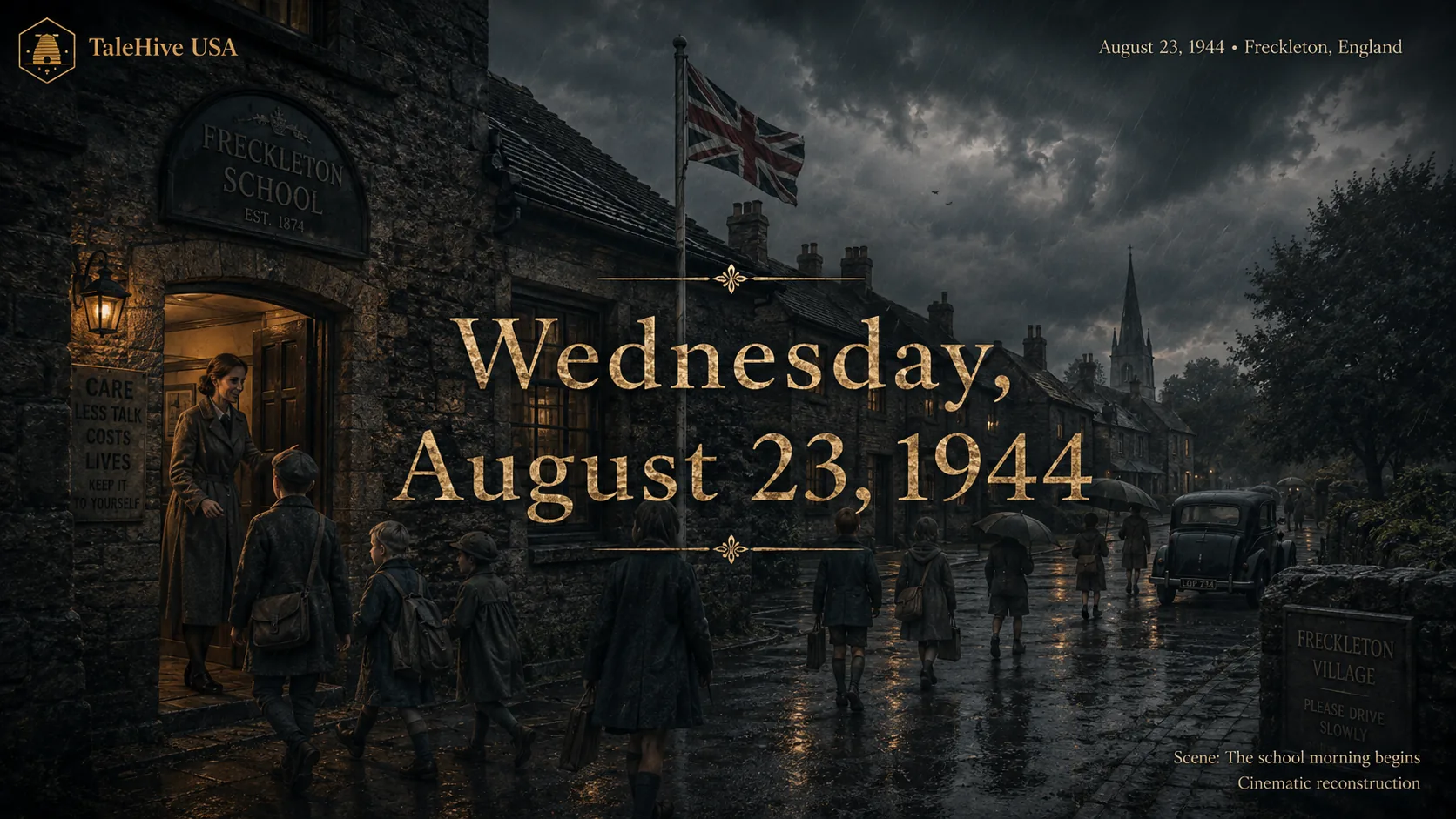
It was only the second day of the new school year.
At Holy Trinity School, children had returned to their classrooms. The youngest pupils were gathered in the infants’ section. Two teachers were with them.
One was Louisa Hulme, an experienced teacher. The other was Jennie Hall, a younger teacher.
Outside, the weather was deteriorating quickly.
Rain became heavier. Wind increased. Thunder rolled across the village.
A 13-year-old pupil named Jacky Nichol was moving around the school checking windows so rain would not blow inside. At one classroom, a teacher reminded him that he should knock before entering.
It was a tiny interruption. Probably meaningless at the time.
Jacky continued toward the infants’ classroom.
He entered. He saw the young children sitting at their desks.
And then the world around them changed.
The Bomber in the Storm
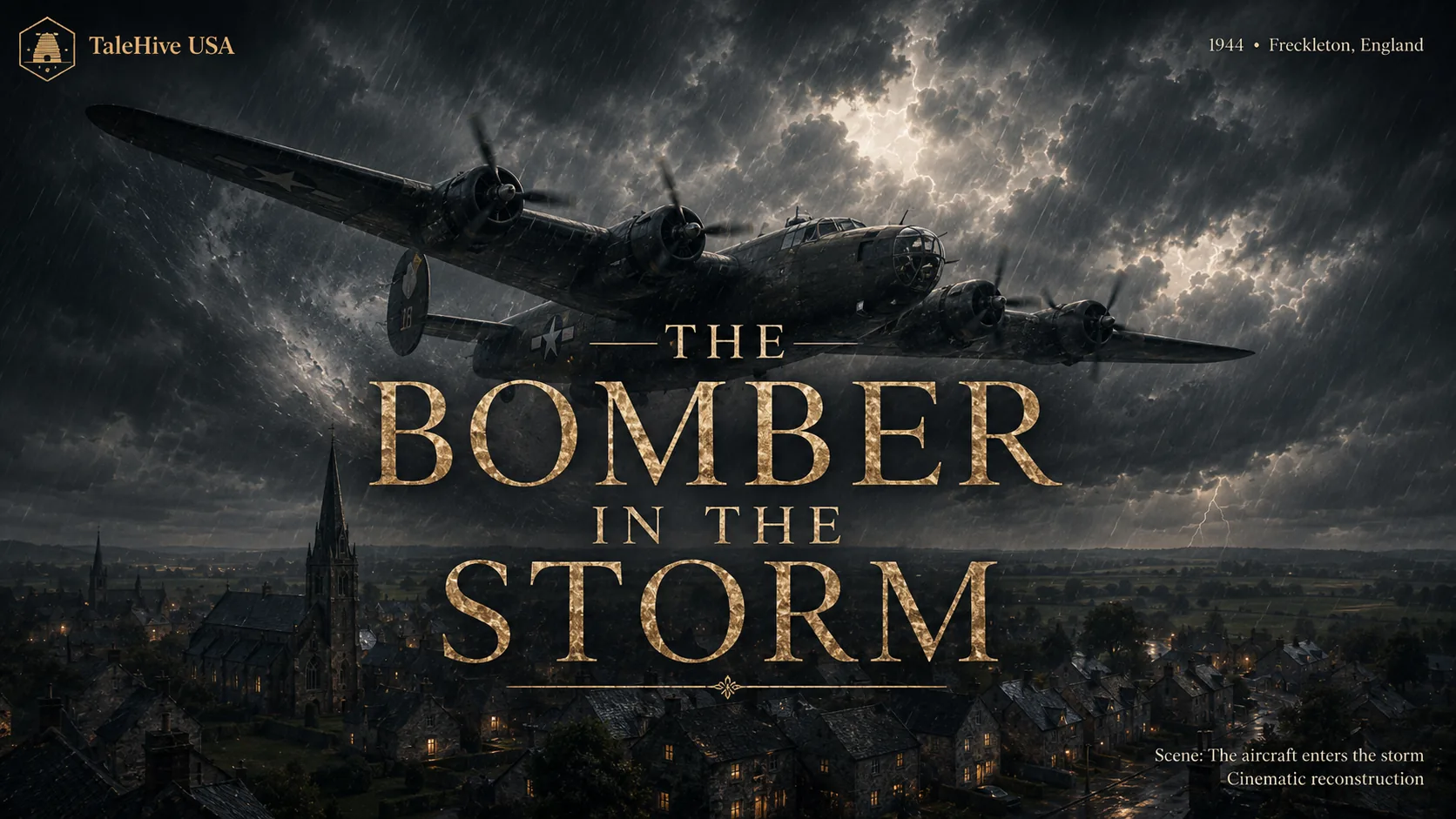
At Warton, an American crew had taken a B-24 Liberator into the air on a routine test flight. Another B-24 went up shortly afterward.
Then the weather turned.
What had looked like ordinary rain developed into a violent storm over the area. Visibility deteriorated and the crews were instructed to return.
The second B-24 managed to move away from the worst of the weather.
The other aircraft did not.
The bomber lost control over Freckleton.
Exactly why has never been established with complete certainty. Investigators considered pilot judgment in extreme weather. Other theories have included a severe downdraft, while witnesses also described the intensity of the storm. The aircraft was so badly destroyed that every detail of its final moments could not be reconstructed with certainty.
What people on the ground saw was much simpler.
A huge aircraft suddenly appeared frighteningly low over their village.
It was coming down.
Seconds
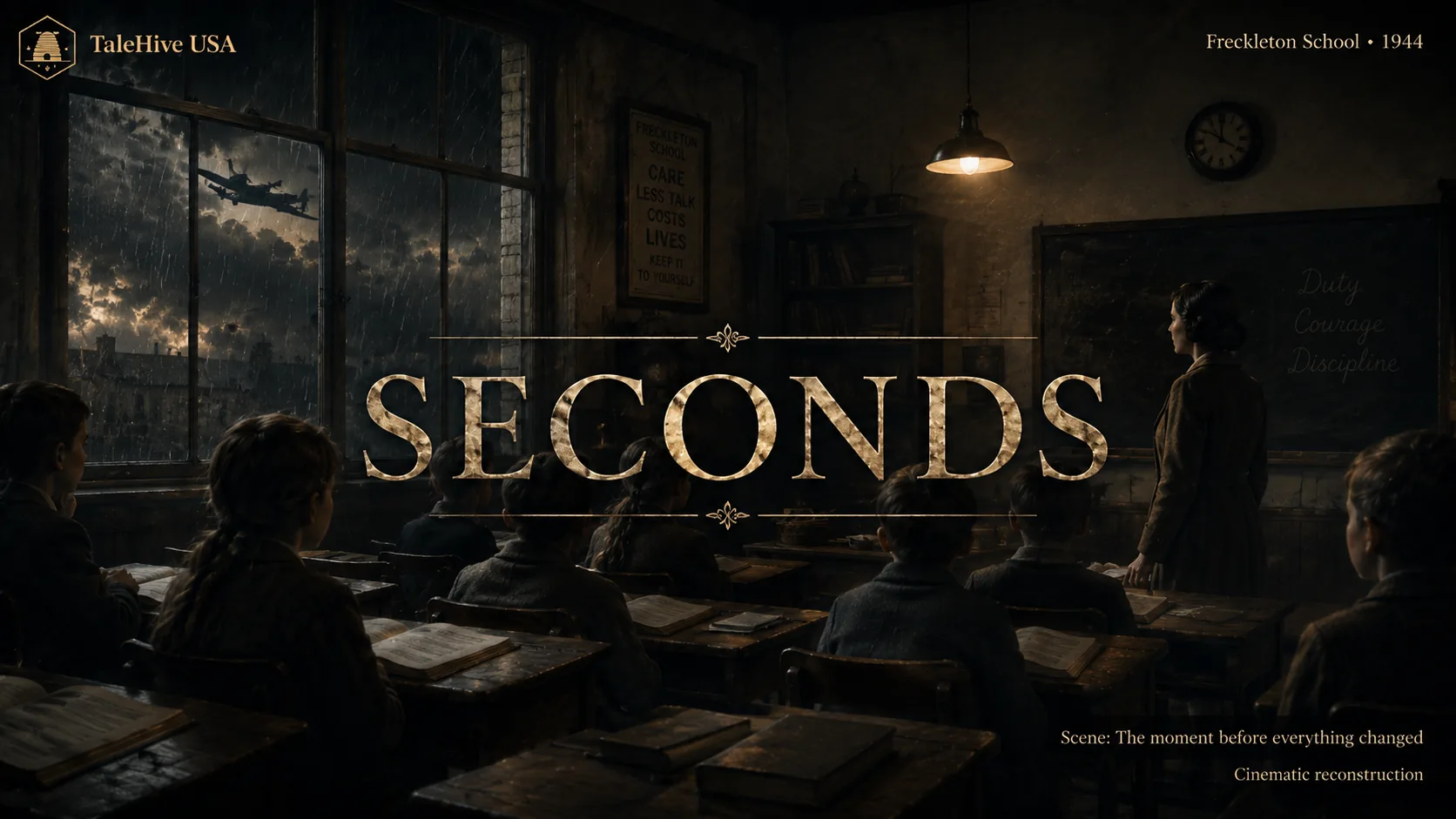
There was almost no time to react.
The B-24 struck buildings as it descended. Parts of the aircraft hit the area around the Sad Sack Snack Bar. The crash then reached the school.
The bomber carried a large quantity of aviation fuel, and fire spread rapidly.
Inside the school, children who only moments earlier had been listening to their teachers were suddenly surrounded by smoke, debris and confusion.
This story does not reproduce graphic descriptions of what followed. The scale of the loss is enough.
Of the 41 children in the infants’ section, only three survived. Thirty-eight children died.
One survivor was Ruby Currell, who was five years old. Later accounts recalled that she had told her father that morning she did not want to go to school, although she could not explain why. She survived beneath her desk.
Jacky Nichol also survived. The ordinary seconds he had lost earlier while being reminded to knock became one of those small details that survivors remember for the rest of their lives.
Then the Village Ran Toward the Fire
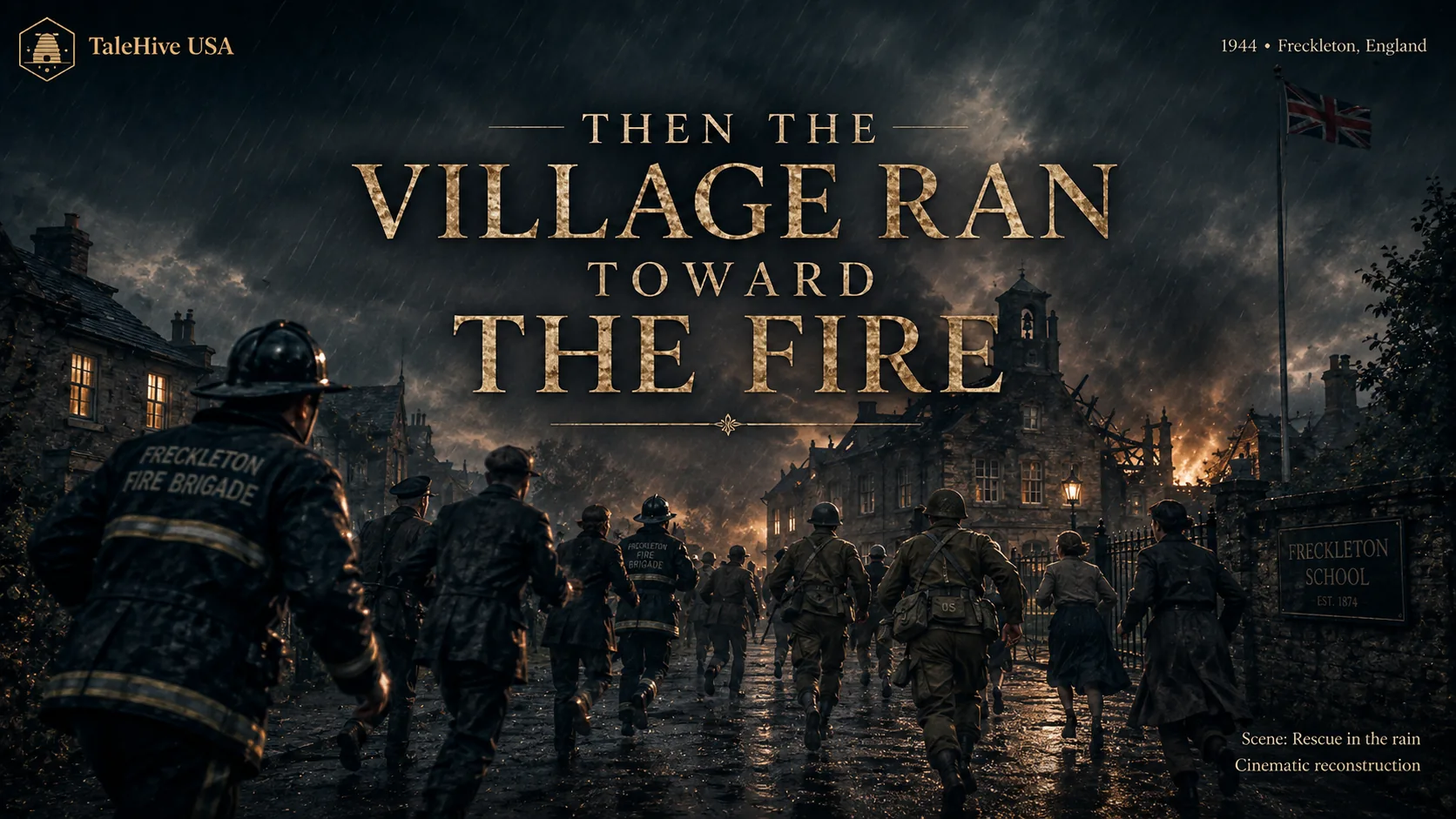
There are moments when people run from danger.
And there are moments when people see others in danger and run directly toward it.
Freckleton saw extraordinary courage that morning.
Villagers rushed toward the school. American servicemen from the nearby base arrived. Police, firefighters, military personnel and local residents joined the rescue effort.
The crash damaged access to part of the normal water supply, making firefighting even harder. American personnel helped move pumping equipment and obtain water. Others searched through debris for survivors.
Nobody standing there was thinking about nationality.
British. American. Civilian. Military.
For those hours, there were simply people trying to save other people.
Sixty-One
The final death toll reached 61.
The Imperial War Museums memorial record remembers the disaster as taking the lives of 38 infant scholars, two teachers, and 21 other civilians and service personnel.
All three American airmen aboard the B-24 were killed. People at the nearby café were also among the dead.
For a small village, the scale of the loss was almost impossible to absorb.
Imagine walking down a street where one house has lost a child, the next house is grieving too, and another family across the road has lost someone they loved.
Someone had lost a teacher. Someone had lost a friend. Someone had lost a brother or sister.
There was almost nowhere in Freckleton untouched by what happened.
The Funeral
Three days later, on August 26, the village began burying many of its dead.
American servicemen helped prepare graves and served as pallbearers for children from the school.
Many of the victims were buried together.
Louisa Hulme survived the initial crash but later died from her injuries. Historical accounts say she wished to be buried alongside her pupils, and that wish was honored.
Think about the Americans standing there.
Only days earlier they had been welcomed into the village as neighbors. Now American servicemen were helping carry the coffins of British children after an aircraft from their own air force had crashed.
Yet Freckleton did not turn the tragedy into hatred between two communities.
The villagers understood that the men aboard the aircraft had also died. The Americans grieved with the village.
The disaster became something both communities carried together.
The Children Who Survived
Only three young children survived the infants’ classroom.
Ruby Currell grew older and lived the years that so many of her classmates never had the chance to experience.
As the decades passed, she became one of the people who helped preserve the memory of the children who died.
That matters because statistics can become distant.
Thirty-eight children.
Sixty-one lives.
History remembers numbers.
Families remember people.
They remember names, voices, small habits, empty chairs and birthdays that continue arriving without the child who should have celebrated them.
For survivors, remembering Freckleton was never simply about remembering an aviation accident. It was about remembering classmates who never grew up.
What Caused the Crash?
There has never been a completely satisfying answer.
The official investigation placed significant attention on the decisions made while operating in such severe weather. Historians have also discussed whether a powerful downdraft could have caused the aircraft to lose altitude. Witnesses described the intensity of the storm and some accounts have mentioned lightning.
But the B-24 was almost completely destroyed, eyewitness evidence was limited, and accident investigation in 1944 was nothing like the sophisticated process used today.
The precise chain of events may therefore never be known with absolute certainty.
What is certain is that a routine test flight encountered a violent storm.
Within minutes, an ordinary Wednesday morning became one of Britain’s deadliest wartime civilian aviation disasters.
What America Gave Back
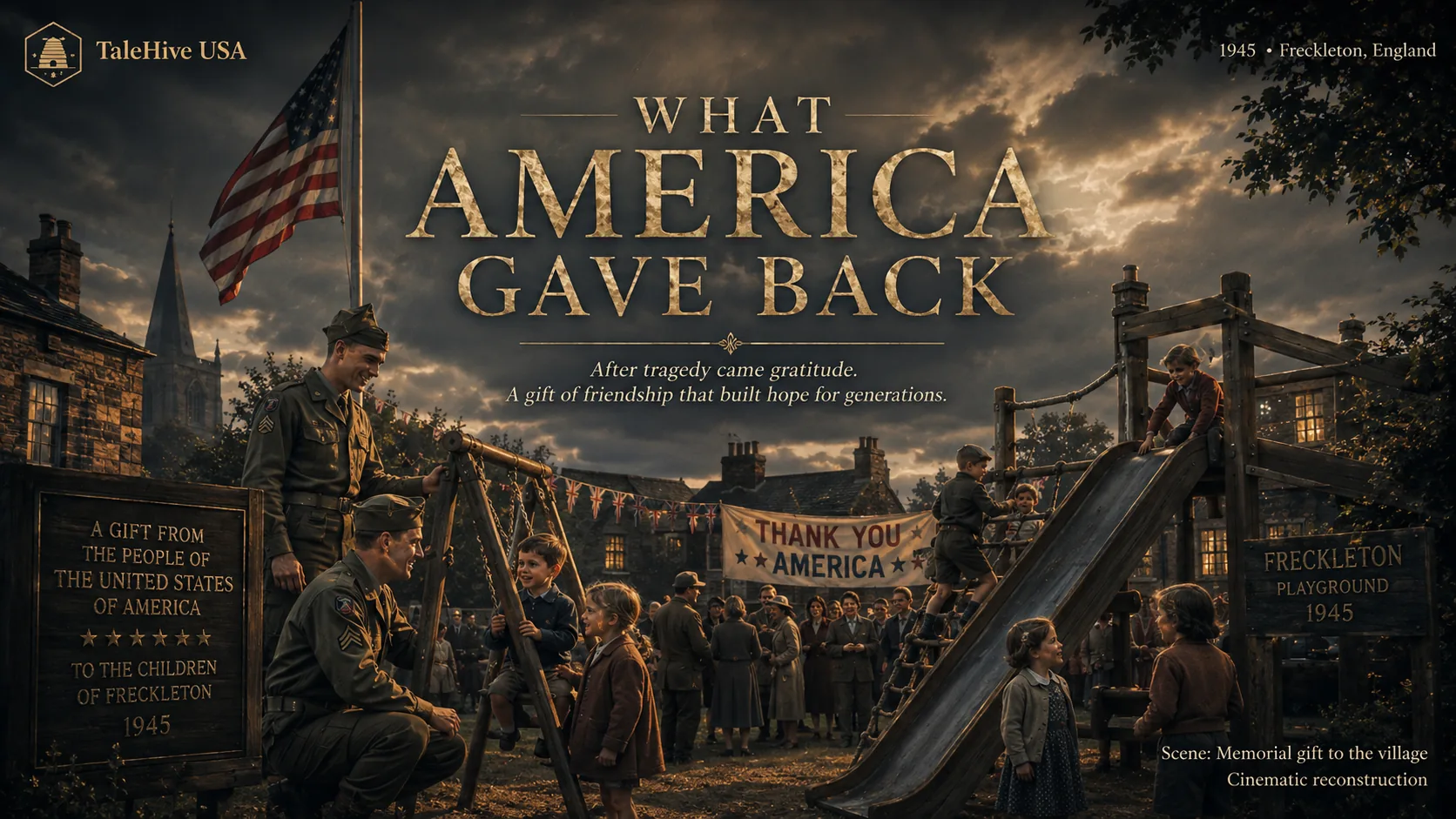
The relationship between Freckleton and the American servicemen did not end with the crash.
In 1945, American personnel funded a memorial playground for the surviving children of the village.
It was a simple but deeply human gesture: a place where children could play, created in memory of children who no longer could.
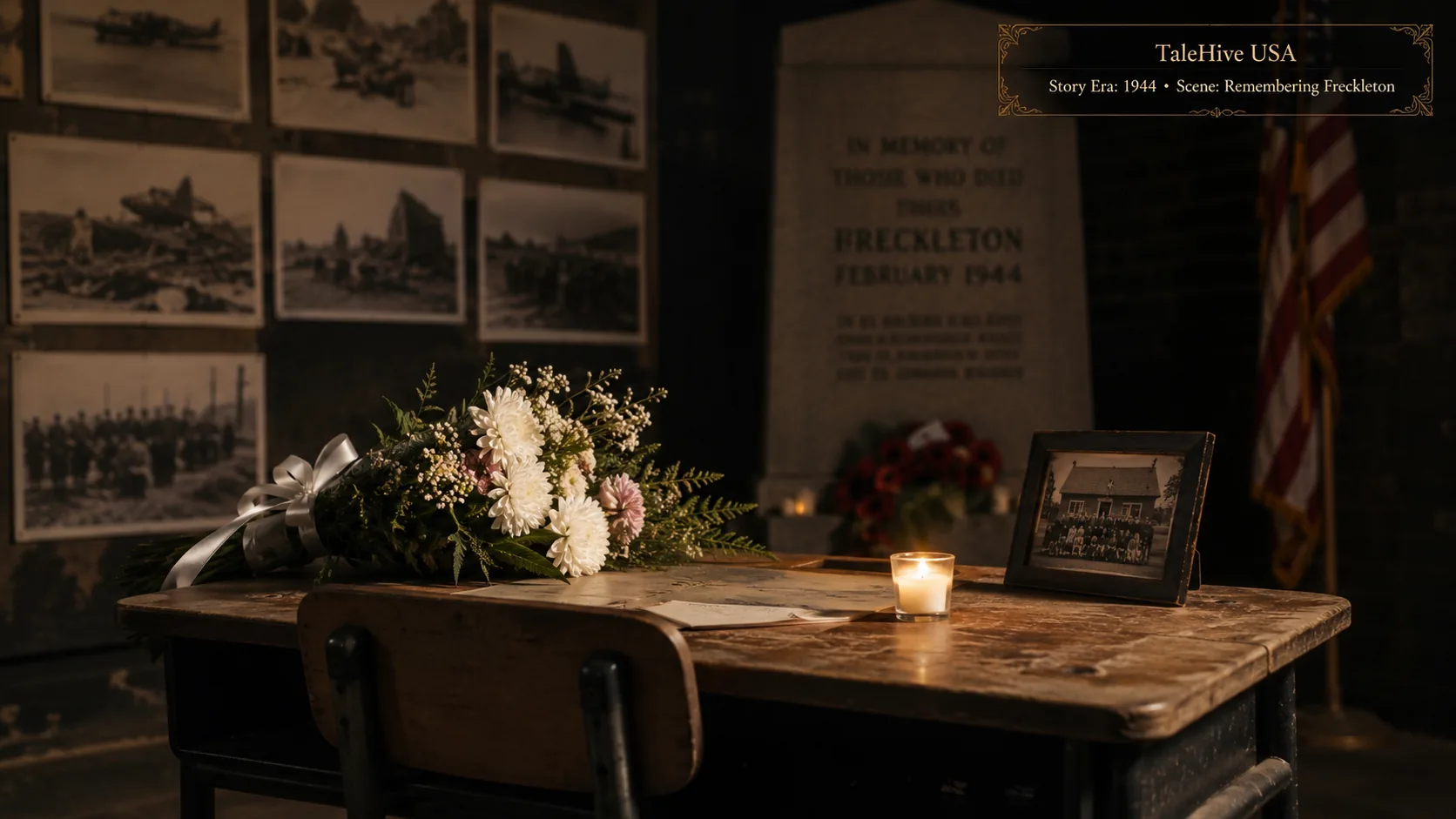
Permanent memorials also preserved the names of those who died.
At Holy Trinity Church, the memorial records the date of the disaster and the children, teachers and civilians who were lost.
The Imperial War Museums War Memorials Register continues to document that memorial today.
Why Don’t More People Know This Story?
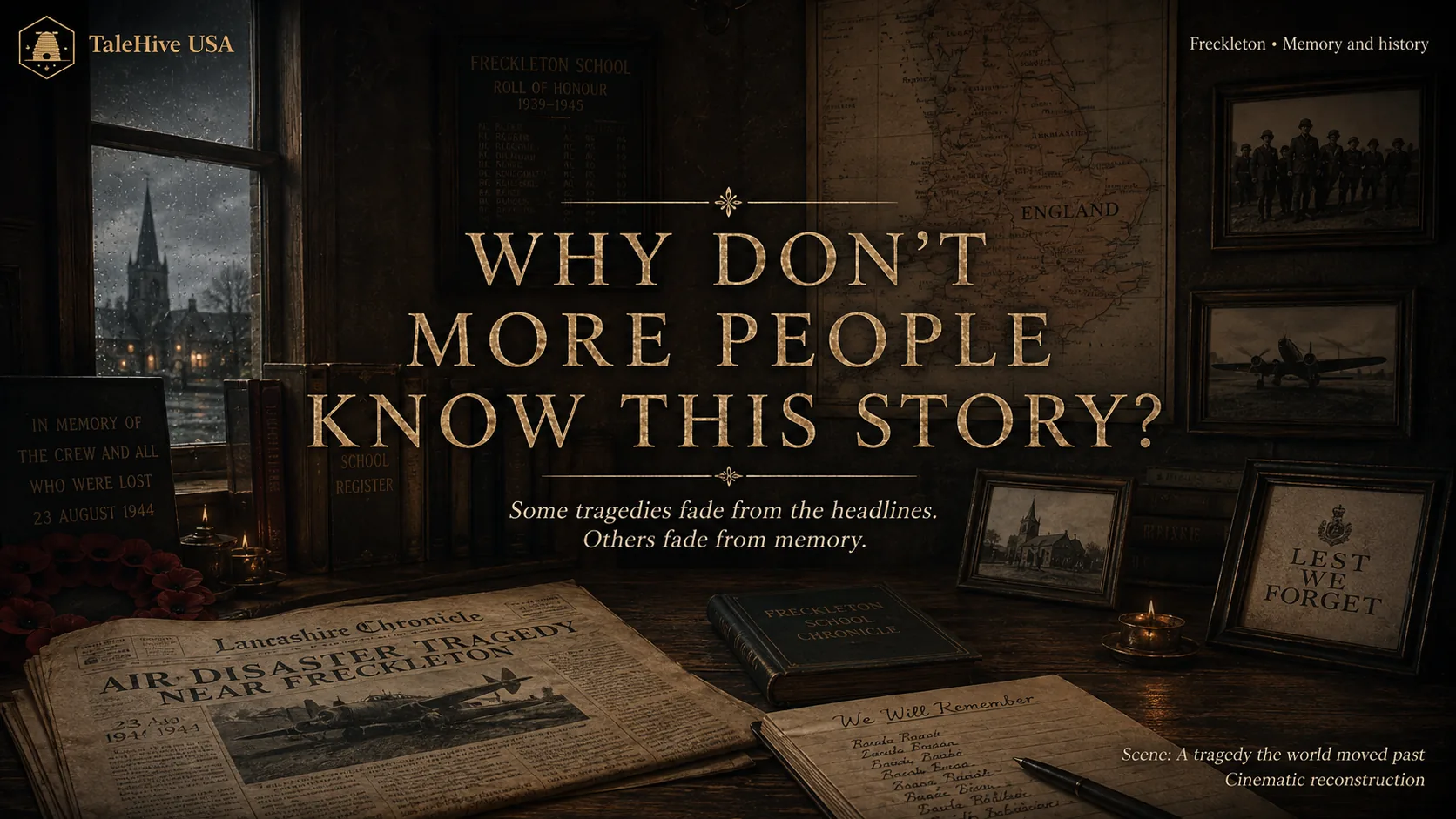
That may be the strangest part of Freckleton.
The disaster happened during one of the largest wars in human history.
Entire cities were being destroyed. Soldiers and civilians were dying on an enormous scale. News moved differently, and every week seemed to contain another tragedy.
When the war ended, the world had millions of losses to remember.
Freckleton became, above all, a local memory.
The village remembered. Families remembered. Survivors remembered.
But much of the wider world moved on.
That is why telling the story again matters.
Not because tragedy should entertain us.
But because remembering is sometimes the only thing history can still give back to people whose lives were cut short.
The School the World Almost Forgot
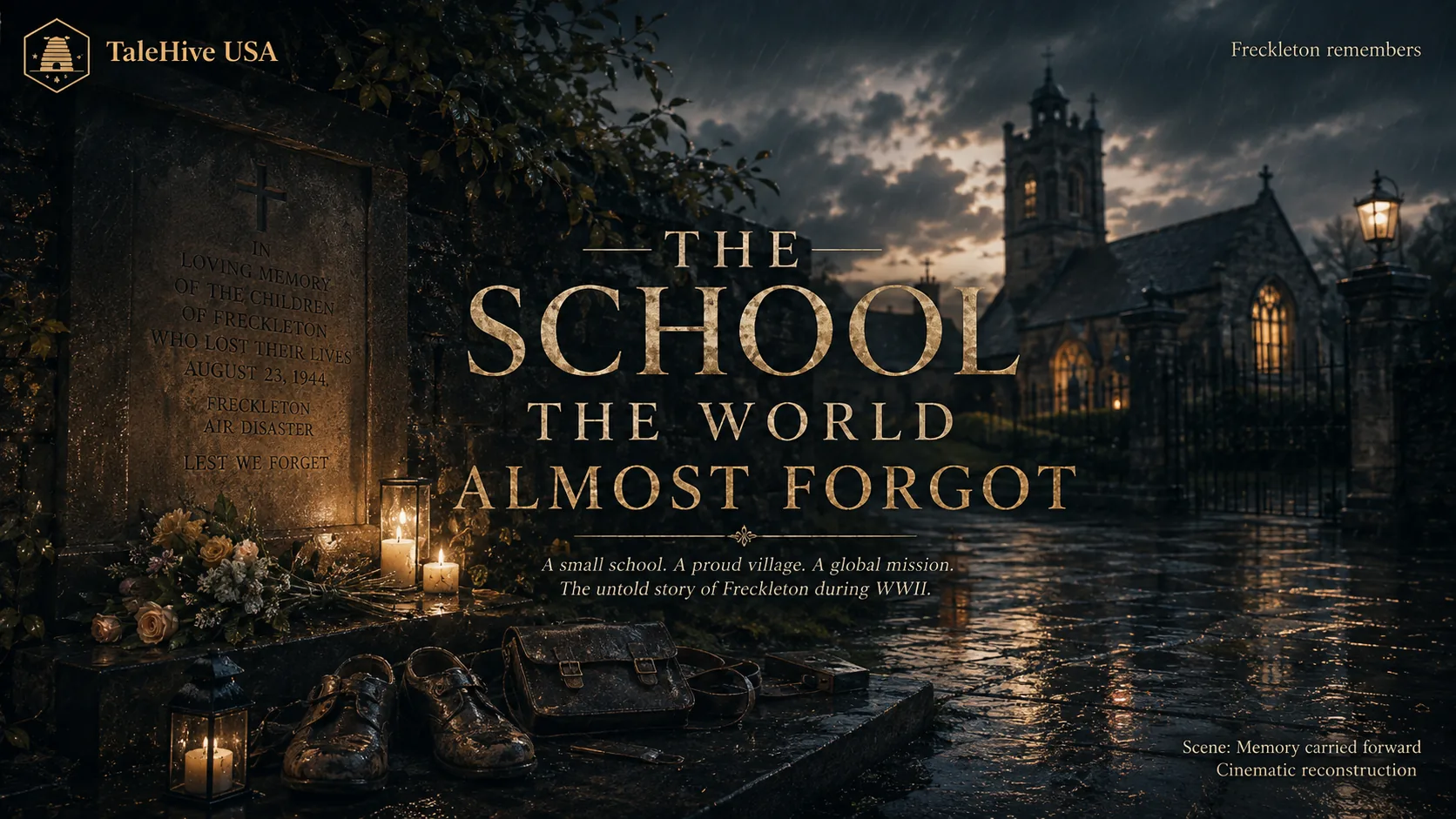
Walk through Freckleton today and you will not hear the sound of that bomber.
The storm is long gone.
The war ended generations ago.
Buildings were repaired. New children were born. Families continued.
But there are memorials.
There are names.
And there are people who still tell the story.
On August 23, 1944, a bomber came out of a storm over a small English village.
Sixty-one lives were lost.
Thirty-eight were children.
The aircraft disappeared. The fire eventually went out. The world continued.
But Freckleton remembered.
And perhaps that is the responsibility of everyone who hears the story today.
Remember the children walking into school that Wednesday morning.
Remember teachers preparing lessons.
Remember villagers running toward danger to help strangers.
Remember American servicemen digging graves and carrying coffins.
Remember survivors who spent decades speaking the names of classmates who never had the chance to grow old.
Because history is not only kings, wars and famous people.
Sometimes history is a classroom.
A rainy morning.
A village.
And 38 children whose names deserve to remain somewhere in the world.
Freckleton remembers them.
And now, so does the Hive.
Sources & References
- Imperial War Museums — Freckleton School Air Disaster, War Memorials Register: https://memorials.iwm.org.uk/memorial/10545
- Smithsonian Magazine — When an American Airplane Crashed Into a School in 1944...: https://www.smithsonianmag.com/history/when-american-airplane-crashed-into-school-1944-english-village-lost-almost-all-of-its-youngest-children-why-has-wwii-worst-civilian-aviation-accident-been-forgotten-180989341/
- Freckleton community history — The history of Freckleton: https://www.freckleton.org/history/asitwas.html
- Imperial War Museums — Freckleton School Air Disaster, War Memorials Register ↗
- Smithsonian Magazine — When an American Airplane Crashed Into a School in 1944... ↗
- Freckleton community history — The history of Freckleton ↗
TaleHive separates published reporting from personal accounts and editorial context where relevant.
More from the hive
 🎧 Audio Available
The Last Sunset Abdul Baqi Ever Saw
Villisca Axe Murders – 1912