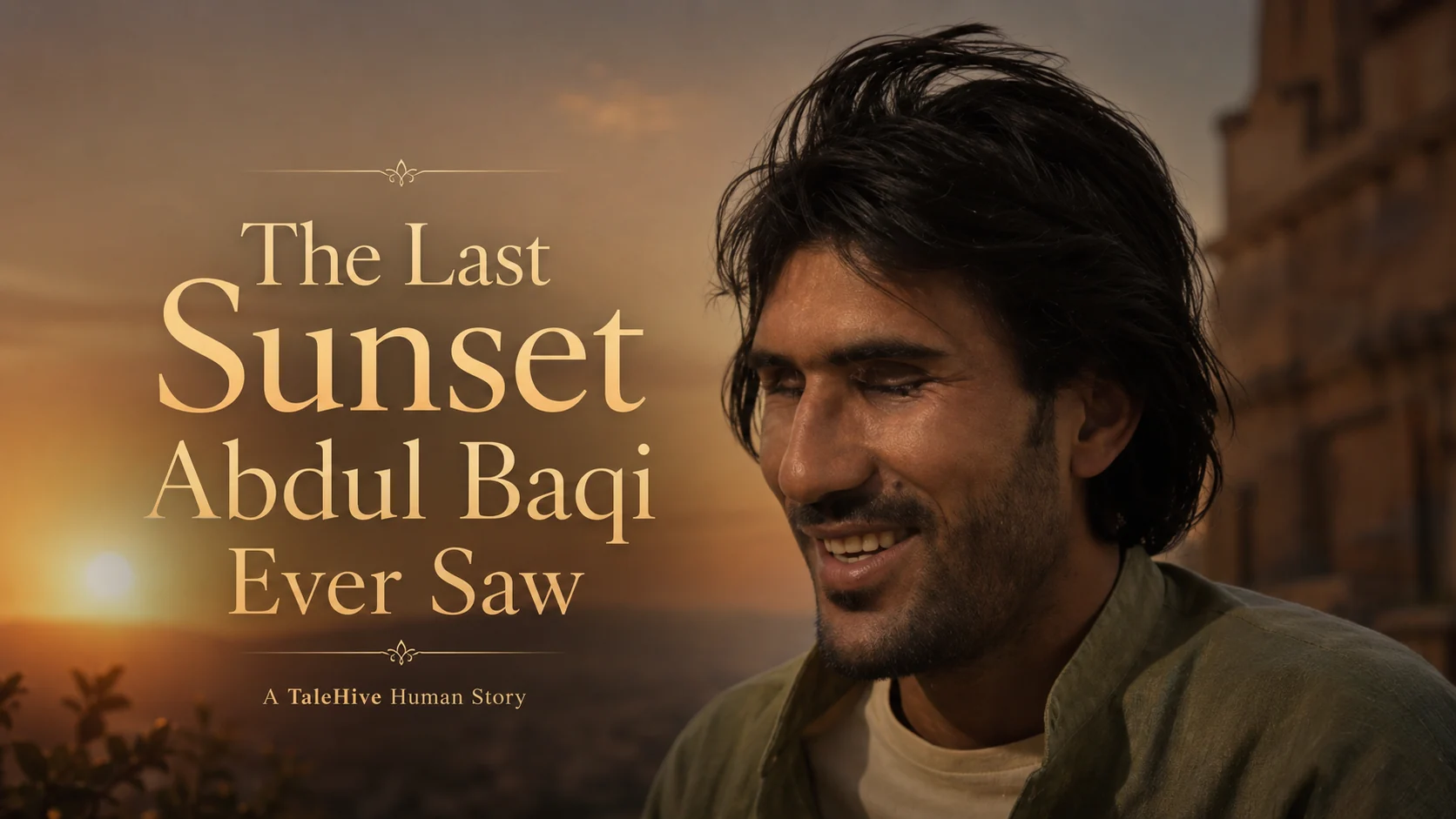
The Last Sunset Abdul Baqi Ever Saw
He once wished for the sun to set. By the next evening, darkness was permanent. What followed became a story of survival, care and the human will to continue.
How do you want this story?
The Last Sunset Abdul Baqi Ever Saw
He once wished for the sun to set. By the next evening, darkness was permanent. What followed became a story of survival, care and the human will to continue. The Last Sunset Abdul Baqi Ever Saw One evening, a young man wished for the sun to disappear. Before the next sunset, darkness had become his permanent world. Editor’s note: This story discusses family violence and permanent disability in non-graphic terms. The central facts of the 2018 attack, hospitalization, arrests, later court agreement and Jamal Tarakai’s support were reported by Dawn, Voice of America and RFE/RL. Details about Abdul Baqi’s later years and eventual return to his family are based on a personal account provided to…
The Last Sunset Abdul Baqi Ever Saw
One evening, a young man wished for the sun to disappear. Before the next sunset, darkness had become his permanent world.
Editor’s note: This story discusses family violence and permanent disability in non-graphic terms. The central facts of the 2018 attack, hospitalization, arrests, later court agreement and Jamal Tarakai’s support were reported by Dawn, Voice of America and RFE/RL. Details about Abdul Baqi’s later years and eventual return to his family are based on a personal account provided to TaleHive and are identified as such.
The last sunset
I have met Abdul Baqi personally. I have sat near him, listened to his voice and heard the story that changed his life. To understand it, we have to return to an evening in May 2018 in Loralai, Balochistan.
Abdul Baqi was travelling in a car when the setting sun poured through the window. The light was bright enough to make him turn his face away.
“The sun is too bright,” he said casually. “I wish it would go down quickly so I could feel comfortable.”
It was an ordinary remark. He had no reason to think it would become one of the most painful memories of his life. Within hours, the same young man would lose his sight permanently.
A marriage he wanted to choose
Abdul Baqi was a young man from Nasirabad village in Loralai District. According to his account and later reporting by RFE/RL, he had been speaking with a young woman for several years and hoped to marry her. He eventually approached her family, and he said they agreed to the proposal.
The difficult part came when he told his own family that he intended to marry the woman of his choice. The disagreement quickly became a serious family confrontation.
Public reporting from Dawn, Voice of America and RFE/RL states that on the night of 12 May or early on 13 May 2018, Abdul Baqi’s father and several brothers restrained him while female relatives were prevented from intervening. During the attack, he suffered catastrophic injuries to both eyes.
This article intentionally does not reproduce the graphic details of the assault. What matters is the result: Abdul Baqi was left permanently blind.
From a family dispute to a criminal case
According to contemporary reports, Abdul Baqi was taken to a hospital in Loralai and later transferred to Helper Eye Hospital in Quetta. Doctors confirmed that the damage to his eyes could not be reversed.
Police became involved soon after the incident. His father and two brothers were arrested, while other brothers were initially reported as being sought by authorities.
For Abdul Baqi, the legal case was only one part of what had happened. His entire daily life had changed. He had gone from being able to move, work and recognize the world visually to having to learn how to navigate it without sight.
The man who opened his home
As photographs and reports of the case circulated online, many people reacted with shock. One of the people who learned about Abdul Baqi was Jamal Tarakai, a Quetta-based journalist and social worker.
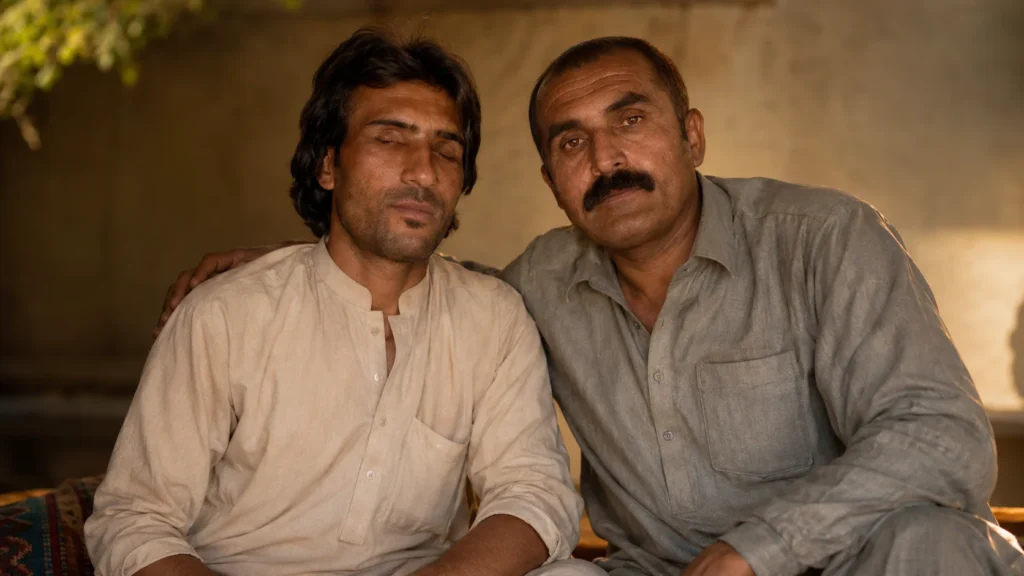
RFE/RL reported that after Abdul Baqi was discharged from hospital, he moved into Jamal Tarakai’s home. What began as immediate support became something much longer.
According to the personal account provided to TaleHive, Abdul Baqi could not safely be left alone during the early period of his blindness. Ordinary tasks had to be relearned. Walking through a room, finding an object, eating independently and understanding the position of people around him all required patience and repetition.
Jamal and his family helped him through that adjustment. His children spoke with Abdul Baqi, kept him involved in family life and helped prevent isolation. The goal was not simply to shelter him. It was to help him regain independence.
Searching for treatment
Jamal also continued looking for medical options. According to the account shared with TaleHive, he contacted people and explored whether any specialist or treatment could restore Abdul Baqi’s sight.
The answer remained the same: the physical damage was too severe. There was no realistic treatment that could restore what had been lost.
That forced a painful change in direction. The search for a cure became a search for adaptation.
Over time, Abdul Baqi learned to move with greater confidence, communicate more independently and manage more parts of daily life without constant assistance.
Years of support after the headlines faded
The public attention around shocking stories often disappears quickly. The difficult part begins after the cameras and headlines move on.
According to the personal account provided to TaleHive, Abdul Baqi remained with Jamal Tarakai and his family for approximately six to seven years. During that period, their home became part of his rehabilitation and everyday life.
There were no headlines for the ordinary work: shared meals, conversations, small improvements, setbacks and the slow process of rebuilding confidence. Yet those quiet years are an important part of the story because long-term care is rarely dramatic. It is repetitive, patient and often invisible to everyone outside the home.
The court agreement
RFE/RL reported that on 10 April 2019 Abdul Baqi submitted a court agreement he had reached with his father. Under the agreement, he forgave his father, and his father promised to allow the marriage to proceed, provide Abdul Baqi with a separate home and give him monthly financial support.
The court then released his father and brothers and the charges were dropped. RFE/RL reported in January 2020 that the promised house and financial support had not been provided at that time and that Abdul Baqi was still living with Jamal Tarakai in Quetta.
The same report said that the relationship with the woman he had hoped to marry had also become uncertain because of pressure from relatives.
Seven years later
The next part of the story comes from the personal account provided to TaleHive rather than the earlier published reports.
After approximately seven years of care and support, Abdul Baqi eventually decided to return to his family. According to that account, he is now living with them peacefully despite his permanent blindness.
That decision may be difficult for outsiders to understand. Returning home does not erase the violence that happened, and forgiveness does not make the attack acceptable.
It is also important not to turn Abdul Baqi’s decision into a rule for other survivors. No victim is required to forgive, reconcile or return to people who harmed them. Safety and personal choice must come first.
What Abdul Baqi’s decision shows is something more complicated: people can carry grief, anger, memory, attachment and the desire for belonging at the same time. Human relationships are not always simple enough to fit into a single ending.
The light that remained
The story of Abdul Baqi is not only about the loss of sight. It is about what happened afterward.
It is about a young man forced to rebuild his daily life after an act of family violence. It is about the years of support provided by Jamal Tarakai and his family after public attention had moved elsewhere. And it is about Abdul Baqi eventually making his own decision about where he wanted to live.
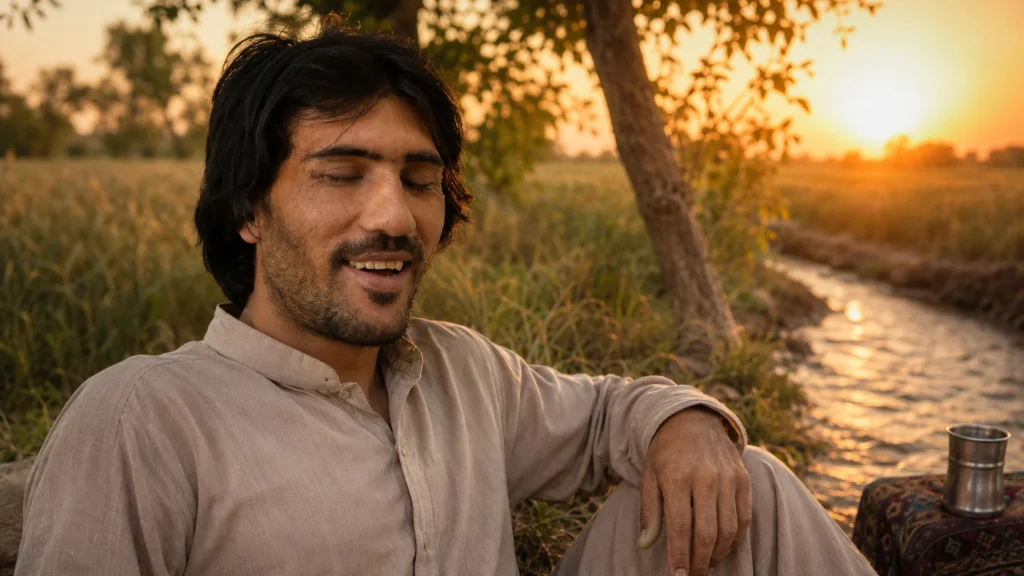
That evening in the car, he wished for the sun to set because the light felt uncomfortable.
The sun went down.
He would never see another sunset.
But the years that followed also revealed another kind of light: patience, care, resilience and the ability to keep making choices after a life has been changed forever.
Sometimes the strongest light is not the one we see with our eyes. It is the one that remains when everything familiar has disappeared.
Sources & References
- Dawn — Boy gets horrible punishment over desire to marry girl of his choice: https://www.dawn.com/news/1407547
- Voice of America — Man Blinded by Father, Brothers for Falling in Love: https://www.voanews.com/a/man-blinded-by-father-siblings-for-falling-in-love/4410181.html
- RFE/RL — Pakistani Man Is Blinded By His Father, Brothers For Wanting A Love Marriage: https://www.rferl.org/a/pakistani-man-blinded-by-his-father-brothers-for-wanting-love-marriage-/30391592.html
- Later-life details — personal account provided directly to TaleHive; not independently confirmed by the public reports above.
Story Gallery
- Dawn — Boy gets horrible punishment over desire to marry girl of his choice ↗
- Voice of America — Man Blinded by Father, Brothers for Falling in Love ↗
- RFE/RL — Pakistani Man Is Blinded By His Father, Brothers For Wanting A Love Marriage ↗
- Later-life details — personal account provided directly to TaleHive; not independently confirmed by the public reports above.
TaleHive separates published reporting from personal accounts and editorial context where relevant.
More from the hive
 🎧 Audio Available
The School the World Forgot
 🎧 Audio Available
Phil Knight — From Car Trunk to Nike