Omni Parker House — Boston’s Haunted Hotel Legends
Explore the folklore, history and reported traditions behind Omni Parker House — Boston’s Haunted Hotel Legends. Supernatural claims are presented as…
How do you want this story?
Omni Parker House — Boston’s Haunted Hotel Legends
Explore the folklore, history and reported traditions behind Omni Parker House — Boston’s Haunted Hotel Legends. Supernatural claims are presented as… Omni Parker House — Boston’s Haunted Hotel Legends Boston’s historic Parker House is real; the supernatural stories attached to it are folklore. Here is the history behind the hotel and the legends visitors continue to tell. A hotel with a very long memory The Parker House opened in Boston in 1855, founded by Harvey D. Parker. Today, as the Omni Parker House, it describes itself as the longest continuously operating hotel in the United States. Its location near Boston’s Freedom Trail and its long guest list have given the building an unusual density of…
Omni Parker House — Boston’s Haunted Hotel Legends
Boston’s historic Parker House is real; the supernatural stories attached to it are folklore. Here is the history behind the hotel and the legends visitors continue to tell.
A hotel with a very long memory
The Parker House opened in Boston in 1855, founded by Harvey D. Parker. Today, as the Omni Parker House, it describes itself as the longest continuously operating hotel in the United States. Its location near Boston’s Freedom Trail and its long guest list have given the building an unusual density of history.
Writers, actors, politicians and public figures passed through its rooms and dining spaces. The hotel’s own history highlights connections with the Saturday Club, Charles Dickens and generations of notable visitors. A building with that much history naturally accumulated stories that were harder to document.
From history to ghost lore
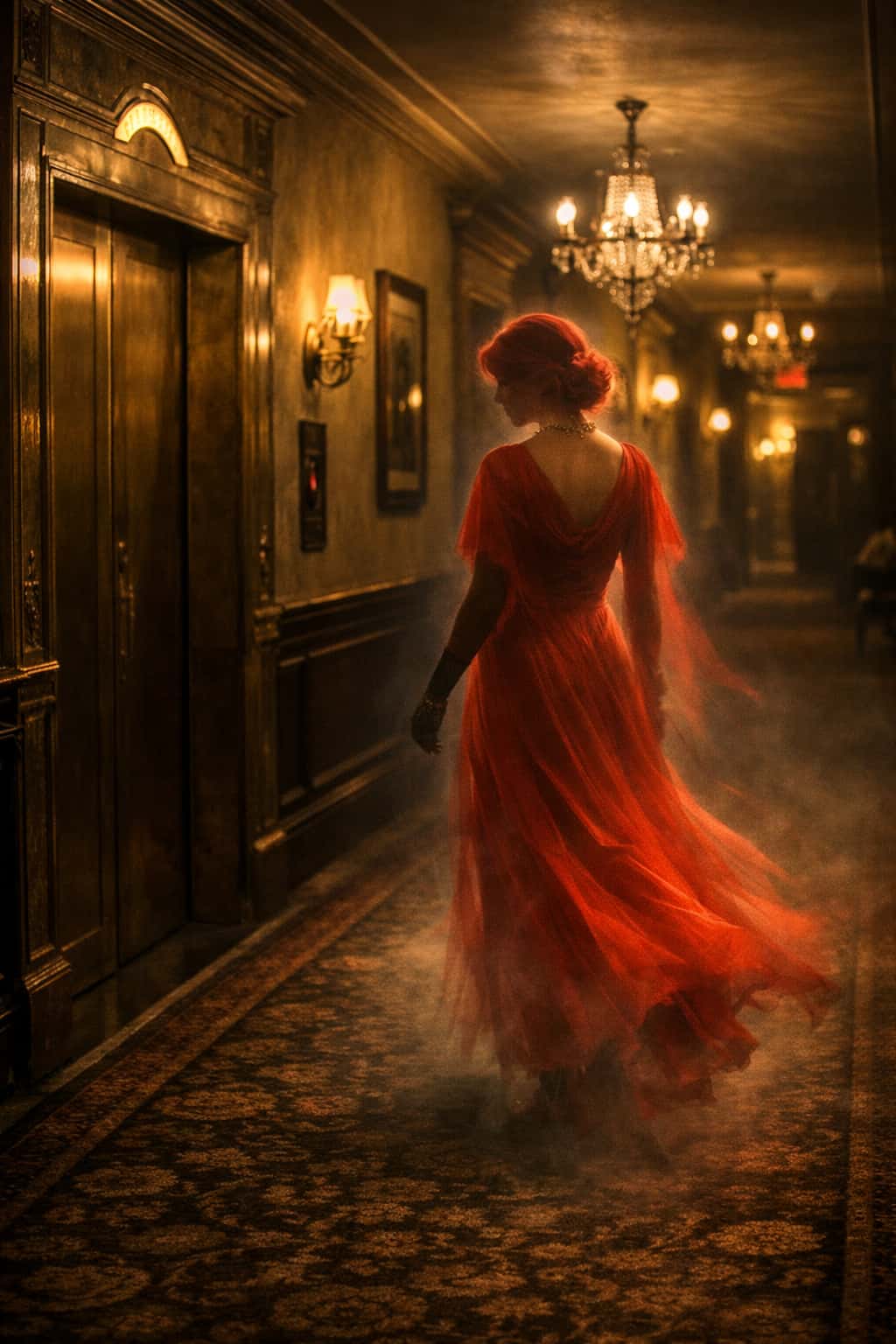
Over time, guests and staff have told stories about unexplained sounds, elevators stopping on particular floors and the reported appearance of a bearded man believed by some to resemble founder Harvey Parker. Other versions of the hotel’s folklore focus on Room 303 and corridors said to feel unusually active at night.
These accounts belong to the category of hotel legend, not verified evidence of supernatural activity. Different retellings change details, which is common in folklore: a story becomes attached to a room, then to a particular guest, then to a later experience that seems to confirm it.
Why old hotels collect ghost stories
Historic hotels are perfect environments for legends. They are public but intimate. Thousands of strangers sleep in the same rooms across decades. Architecture changes, sounds travel through old walls, and a visitor already aware of a ghost story may interpret an ordinary noise differently.
None of that makes the stories unimportant. Folklore tells us how people experience a place. A ghost legend can preserve memories of an old building, a founder or a vanished era even when the supernatural claim itself cannot be established.
What we can say with confidence
We can document that the Parker House has operated since the nineteenth century, hosted major literary and political figures and became a landmark in Boston hospitality. We can also document that ghost stories have become part of its modern identity.
What we cannot responsibly claim is that a specific apparition has been scientifically verified. TaleHive therefore presents the haunted Parker House as a collection of reported traditions and visitor stories rather than as proof of paranormal activity.
Why the story still matters
The most interesting question may not be whether the hotel is haunted. It may be why a building filled with more than a century and a half of human arrivals, departures and memories feels like the perfect place for a ghost story to survive.
How to read a haunted-hotel story
Historic hotels are perfect settings for ghost stories because they accumulate layers of real human history. Guests arrive and leave, public figures pass through, staff members preserve anecdotes, and buildings change while keeping familiar rooms and corridors. Over decades, ordinary memories can merge with dramatic storytelling until a legend feels inseparable from the property.
The Omni Parker House has a documented history that is interesting even without a supernatural claim. It opened in the nineteenth century and became associated with Boston’s political, literary and social life. That real history gives later ghost stories recognizable names, rooms and architectural details. It also makes it important to distinguish what the hotel can document from what visitors say they experienced.
A reported cold spot, an unexplained sound or a story about an apparition is not scientific proof of a ghost. At the same time, folklore is a legitimate subject of cultural reporting when it is labeled accurately. Stories reveal what communities remember, what visitors expect and how a building develops a personality in the public imagination.
TaleHive therefore treats Parker House ghost accounts as legends connected to a real historic hotel. Readers can enjoy the atmosphere without being told that a supernatural explanation has been established. That distinction protects the mystery rather than weakening it: the documented history remains true, the reported experiences remain part of the hotel’s lore, and the final interpretation belongs to the reader.
The value of the legend
Ghost stories can become part of a place’s identity even when no paranormal claim can be proven. Guests repeat them, staff preserve them, travel writers retell them and each generation adds details. In that sense, the story itself becomes historical evidence—not evidence of a ghost, but evidence of what people have believed and repeated about the building.
That distinction is why TaleHive keeps folklore in a separate editorial frame. The Parker House can be appreciated as a significant Boston hotel with a long documented past, and its haunting stories can be appreciated as cultural lore. Neither requires pretending that an unexplained noise has been scientifically identified as a supernatural event. The history provides the setting; the legend provides the atmosphere.
Sources & References
- Omni Parker House — Hotel history: https://www.omnihotels.com/hotels/boston-parker-house/property-details/history
- Historic-hotel ghost accounts are presented as folklore, not proof of paranormal activity.
- Omni Parker House — Hotel history ↗
- Historic-hotel ghost accounts are presented as folklore, not proof of paranormal activity.
TaleHive separates published reporting from personal accounts and editorial context where relevant.
More from the hive
 🎧 Audio Available
The School the World Forgot
Villisca Axe Murders – 1912