Jeff Bezos — From Online Bookstore to Amazon
Explore the documented turning points, decisions and setbacks behind Jeff Bezos — From Online Bookstore to Amazon, with sources and an editorially…
How do you want this story?
Jeff Bezos — From Online Bookstore to Amazon
Explore the documented turning points, decisions and setbacks behind Jeff Bezos — From Online Bookstore to Amazon, with sources and an editorially… Jeff Bezos — From Online Bookstore to Amazon How Jeff Bezos used the early commercial internet to build an online bookstore, then expanded Amazon into retail infrastructure, cloud computing, devices and logistics. Seeing the internet as a distribution shift Jeff Bezos was born in 1964 and worked in finance and technology before founding Amazon. In the early 1990s he became interested in the rapid growth of internet usage and began looking for products that could be sold effectively online. Books were attractive because the number of available titles was far larger than any…
Jeff Bezos — From Online Bookstore to Amazon
How Jeff Bezos used the early commercial internet to build an online bookstore, then expanded Amazon into retail infrastructure, cloud computing, devices and logistics.
Seeing the internet as a distribution shift
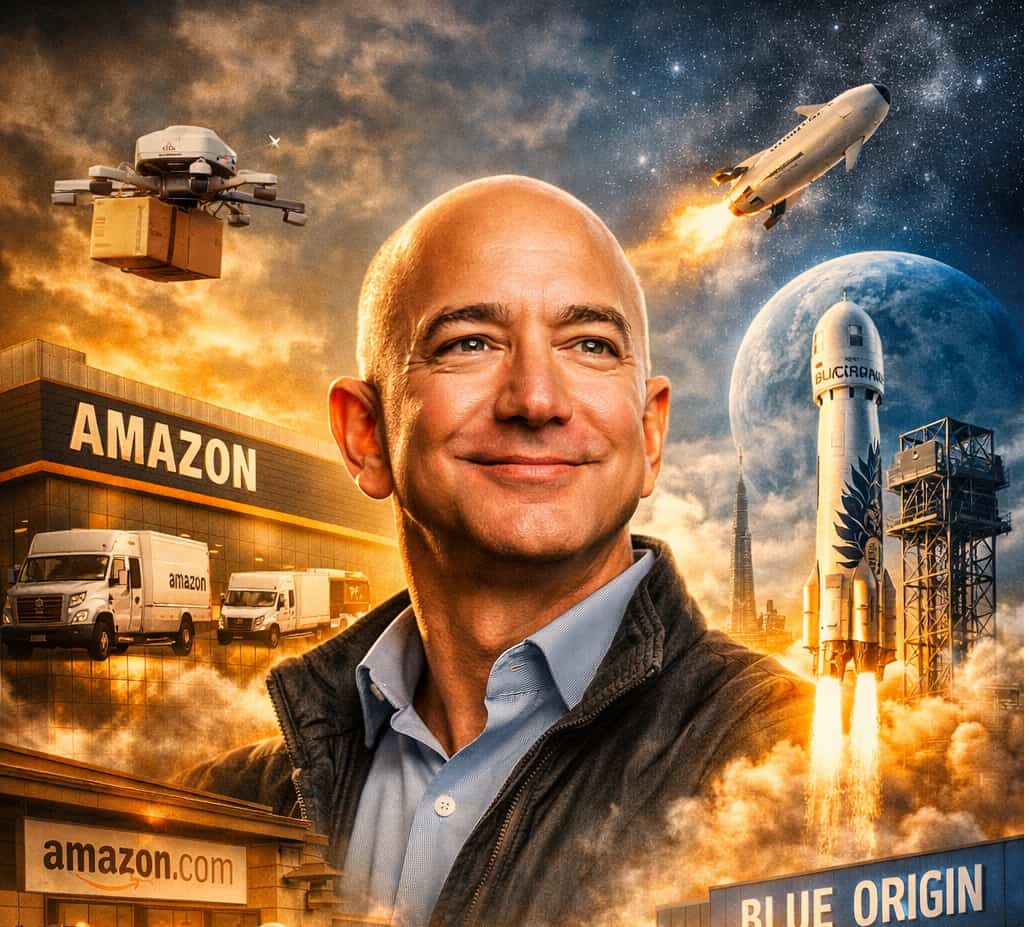
Jeff Bezos was born in 1964 and worked in finance and technology before founding Amazon. In the early 1990s he became interested in the rapid growth of internet usage and began looking for products that could be sold effectively online. Books were attractive because the number of available titles was far larger than any physical store could stock in one location.
Bezos left his job and founded the company in 1994. Amazon began selling books online in 1995. The early website was modest by modern standards, but the underlying idea was significant: an internet storefront could offer broad selection without requiring every title to sit on the shelf of a neighborhood shop.
From books to the “everything store”
Amazon expanded into music, video, electronics and many other categories. It also opened the platform to third-party sellers. That changed Amazon from a retailer that bought and resold products into a marketplace where independent businesses could reach customers through the same site.
Growth required enormous investment in fulfillment centers, software and logistics. Fast delivery became a product feature in its own right. Amazon Prime, introduced in 2005, connected a membership model with shipping benefits and later with digital services, encouraging customers to use Amazon more frequently.
AWS changed the company again
One of Amazon’s most important businesses emerged from infrastructure the company had to build for itself. Amazon Web Services began offering computing resources over the internet in the mid-2000s. Instead of every startup or company buying and maintaining all of its own servers, customers could rent computing and storage capacity as needed.
AWS helped establish modern cloud computing and became strategically important to Amazon. The development also showed that internal capabilities can become external products when a company recognizes that other organizations face the same technical problems it has already solved.
Scale and scrutiny
Amazon’s expansion reshaped retail expectations around selection, price, convenience and delivery speed. It also brought criticism and regulatory attention involving labor conditions, competition, seller relationships, market power and the effects of e-commerce on traditional retailers. Those questions are part of the story of scale and should not be hidden behind an inspirational founder narrative.
Bezos stepped down as Amazon’s chief executive in 2021 and became executive chair. By then Amazon was far more than an online bookstore, with businesses spanning retail, cloud services, advertising, entertainment, devices and logistics.
The enduring business idea
The most useful way to understand Amazon’s growth is as a sequence of systems. The website created a new storefront; fulfillment infrastructure made selection and delivery practical; the marketplace brought in outside sellers; Prime increased customer frequency; AWS turned computing infrastructure into a service. Each system reinforced parts of the others.
That does not make the company’s growth inevitable or every decision correct. It shows how one distribution insight can become a platform when a company keeps reinvesting in capabilities that reduce friction for customers and, eventually, for other businesses.
Why the story still matters
Amazon’s history is a better guide than a changing estimate of Bezos’ wealth. It illustrates long-horizon investment, platform economics and the benefits and responsibilities that appear when a company becomes infrastructure for both consumers and other businesses.
Long-term investment and the cost of convenience
Amazon became known for reinvesting heavily rather than maximizing short-term accounting profit in its early years. Warehouses, software, delivery networks and new categories required capital before they produced the scale customers later experienced as ordinary convenience. The strategy depended on investors accepting that building infrastructure could matter more than producing the highest possible near-term margin.
That infrastructure also changed expectations outside Amazon. Two-day and faster delivery became a competitive benchmark, online product reviews became a standard shopping feature, and third-party sellers gained access to an enormous audience while becoming dependent on marketplace rules they did not control. The same systems that made Amazon useful also gave the company significant leverage over participants in its ecosystem.
This is why the Amazon story should include both innovation and scrutiny. A platform can lower transaction costs for millions of people while creating new questions about labor, competition and bargaining power. Bezos’ role was to push an unusually long horizon for investment, but the consequences of that scale extend well beyond one founder’s success.
From founder story to institution
Bezos’ departure from the CEO role also marks an important transition. Companies that reach Amazon’s scale must operate beyond the habits of a single founder. Leadership systems, boards, regulators, employees, sellers and customers all shape what happens next. The founder’s early willingness to invest for the long term remains part of Amazon’s culture, but the company’s future is now an institutional question rather than a personal startup story.
Sources & References
- Amazon Investor Relations — company filings and history: https://ir.aboutamazon.com/
- Amazon — About Amazon / company history: https://www.aboutamazon.com/about-us
TaleHive separates published reporting from personal accounts and editorial context where relevant.
More from the hive
 🎧 Audio Available
Phil Knight — From Car Trunk to Nike
Jan Koum — From Food Stamps to WhatsApp